Final Blog: The Experience

I can’t believe that our time in Italy is coming to a close.  It has been such an amazing experience and has definitely been full of many adventures.  I will definitely never forget my month in Italy for a variety of reasons.
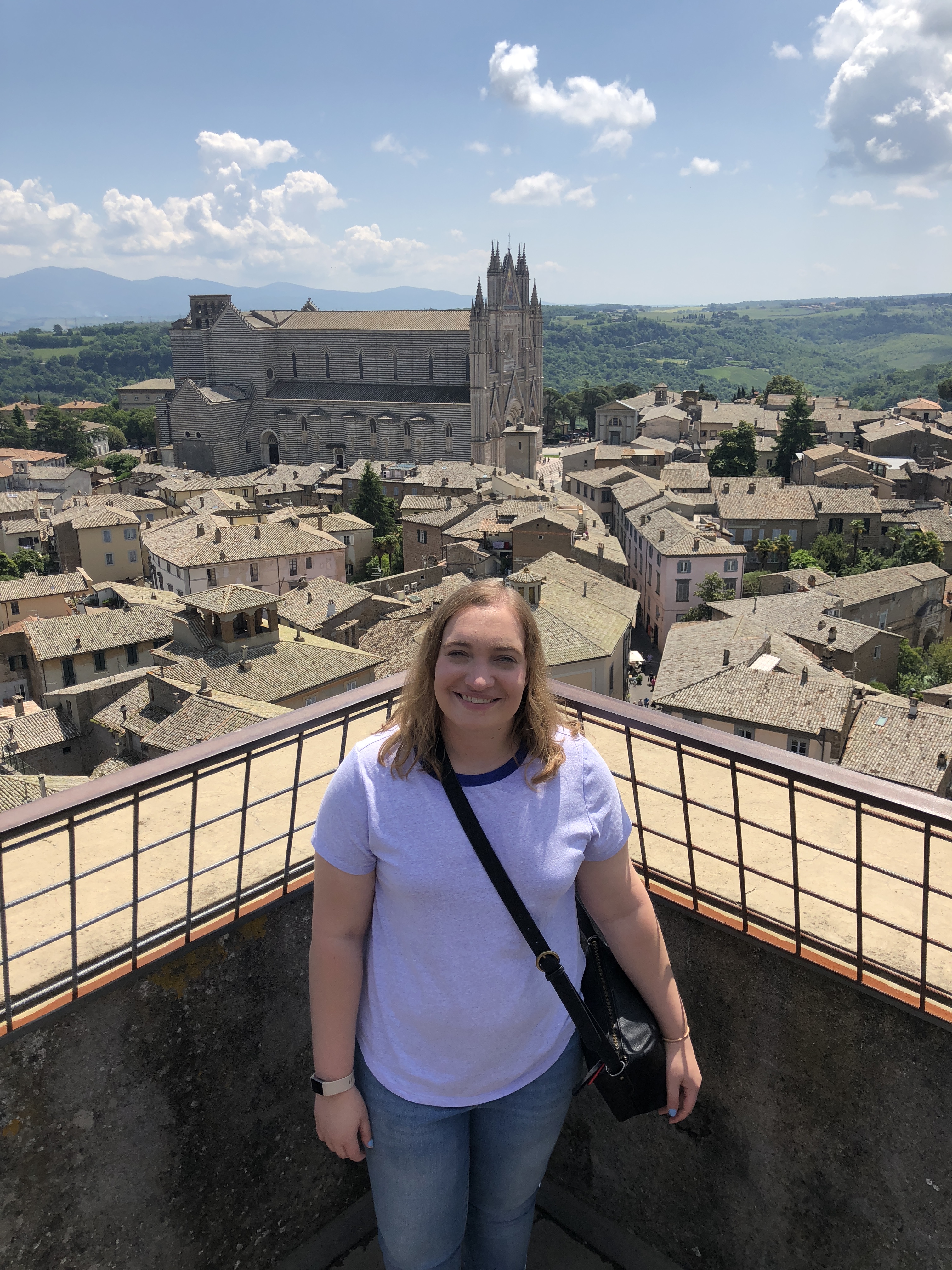
A photo of me from the top of the clock tower on Day One.

Specifically, though, a HUGE part of the Italian culture that I have learned about is their dining culture.  Being in Italy has definitely affected the way I view dining as well as the consumptions of food and wine.   For one, I have learned to take my time during a meal.  Back in America, I would often eat my food in a big hurry.  I would either get fast food and eat it in my car, grab something out of the refrigerator at home, or go out to eat but usually scarf my food down as fast as possible and leave in between 30-45 minutes.  In Italy, however, the value the importance of sitting down with each other and enjoying each other’s company in leisure during dinner time.  My meals here in Italy would usually last between 2-3 hours, and some of my best memories from this trip were made over the dinner table with friends.  By taking my time during meals in Italy, my dining partners and I were able to learn so much about each other and dive into deep conversations that we would not have if we were trying to “hurry up and get the check.”
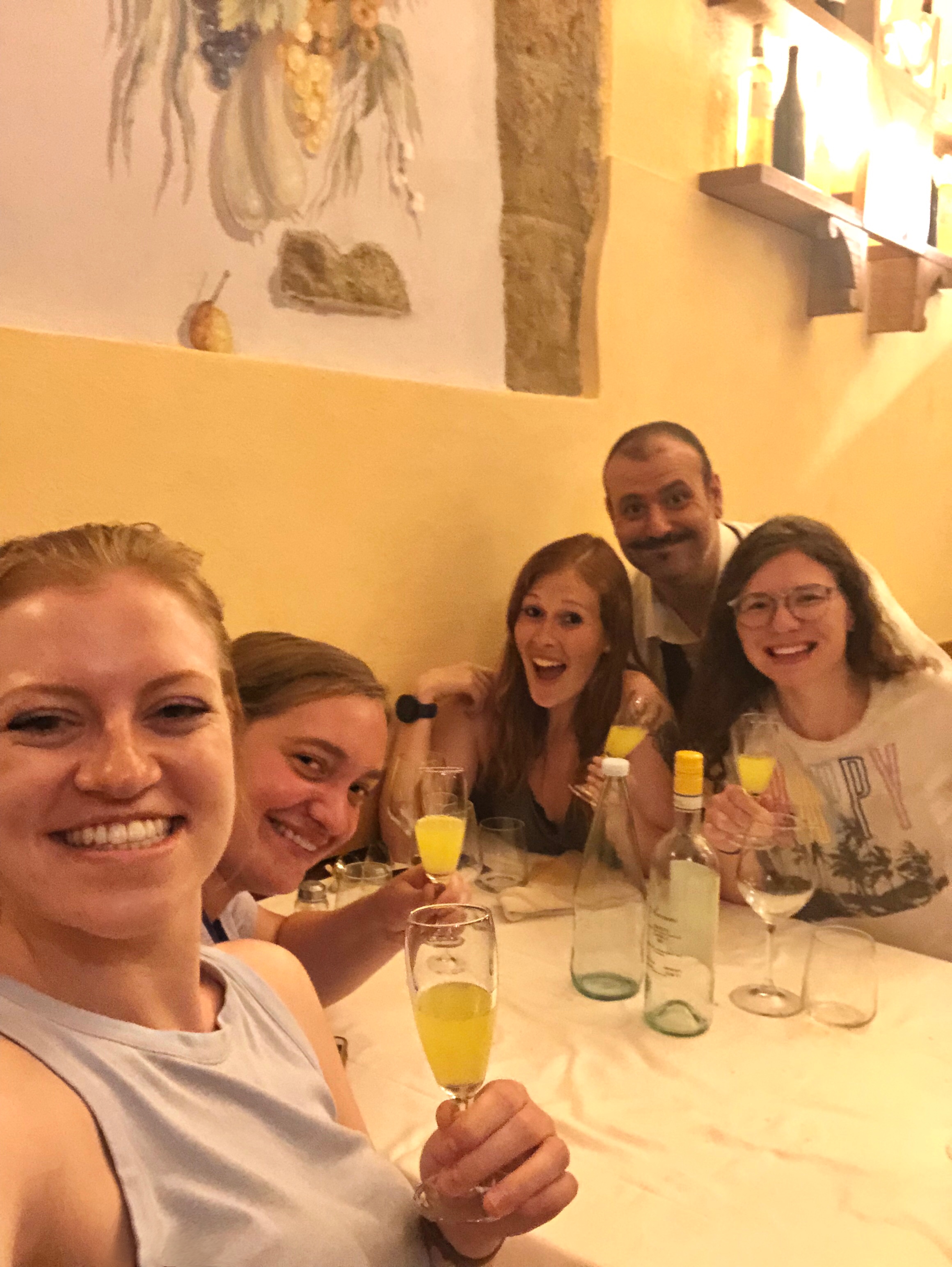
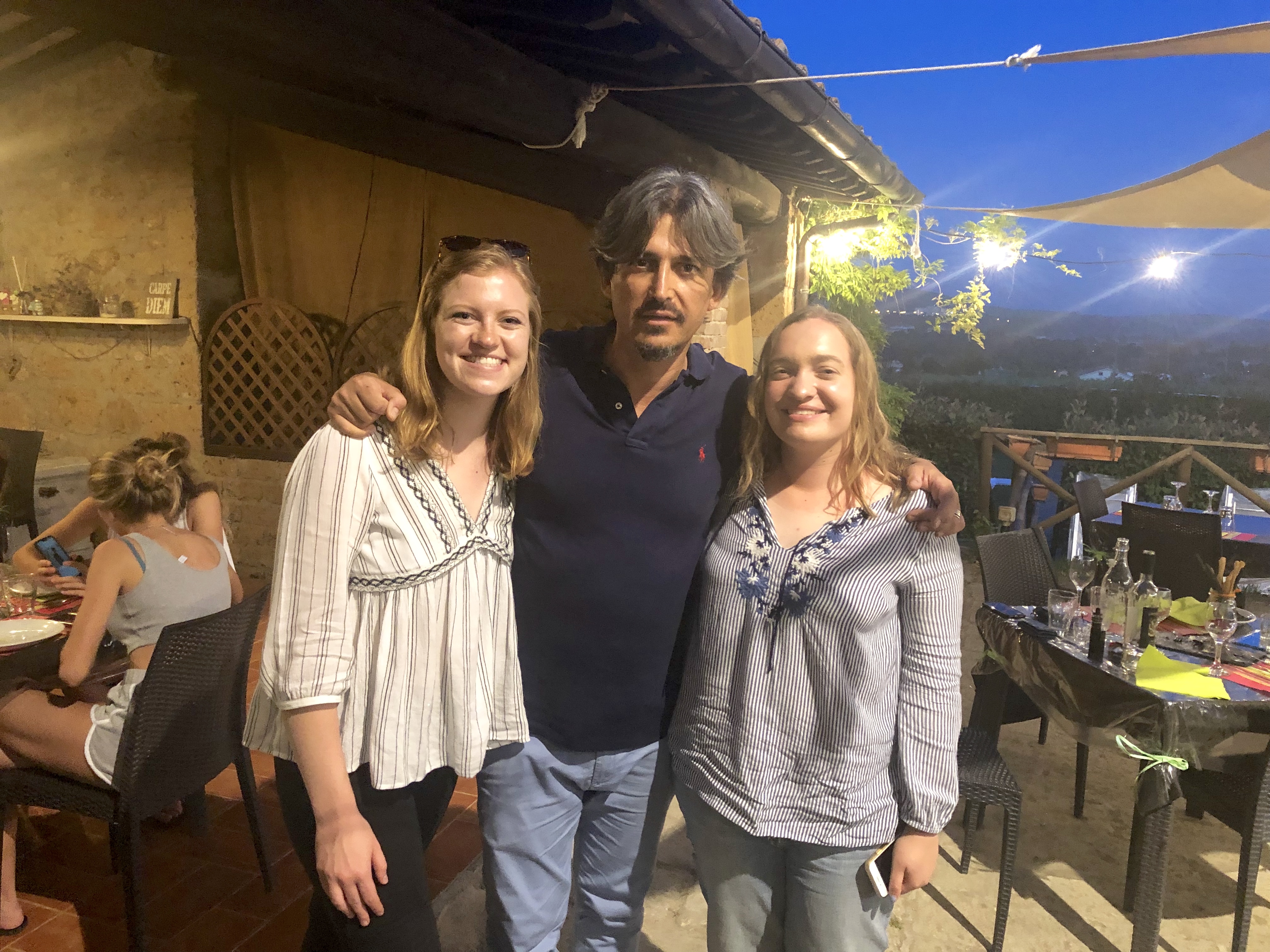
Dinner with wonderful friends at Trattoria del Moro Aronne; great food and great conversation.
Kellie and I had a great opportunity to meet up with one of our Italian friends who is from Rome as he was passing through Orvieto one evening! Fantastic meal at Poggio di Orvieto.

Another aspect of dining/food and wine consumption in Italy that I have grown to appreciate is the amount of care they put into the quality of their food/wine.  Specifically, the Slow Food Movement has taught me the value of eating fresh and local.   I love the concept of 0 km ingredients and freshly grown foods.  I also love the amount of passion that Italians have for this.  I love going to a restaurant and having the waiter or waitress speak with such enthusiasm about the food they will soon serve me.  Back in the United States, I would not choose the freshest food.  I would buy a lot of items that had been pre-frozen or not quite organic, and I would also eat a lot of fast food that is obviously not very fresh.  While I do not think it will be possible for me to eat totally organically and naturally back home due to time and money constraints, I would like to make an effort to become better at this.  I really loved the Italian market and would like to attend more farmers’ markets back in Manhattan.
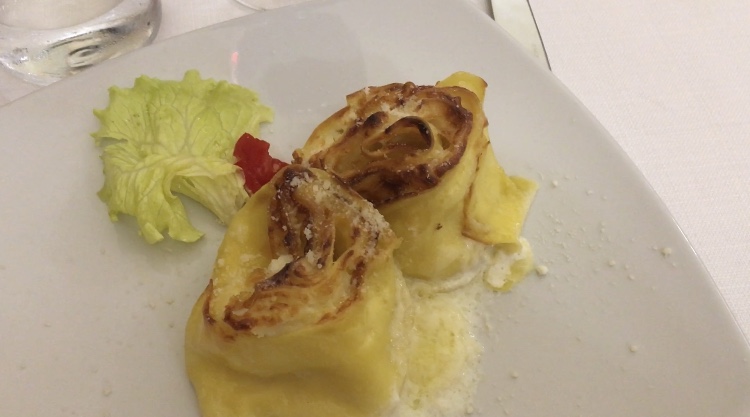
When I think of fresh Italian food, I think of Nidi, my favorite dish in all of Italy served at Trattoria del Moro Aronne.

A third aspect of food and wine consumption that has been significant to me is learning to appreciate wine.  Before coming to Italy, I was somewhat of a wine drinker, but I always chose the same 8-dollar bottle of Cabernet Sauvignon at the liquor store.  I never knew any variety, and I never knew how to taste the difference between wines or determine what I like and don’t like.  However, coming to Italy where wine is a part of the culture, I have learned so much about how to taste wines, not only from Food and Wine class, but also by dining out at restaurants and receiving wine recommendations from my waiters/waitresses.  I greatly value the wine culture in Italy, and find it both interesting and beneficial that the Italians do not believe in binge drinking (especially not wine).  While in America we may go out to the bar and drink tons of wine for the purpose of getting drunk, here in Italy, they appreciate a small glass of wine with each meal.  I greatly appreciate this practice because I do not enjoy binge drinking.
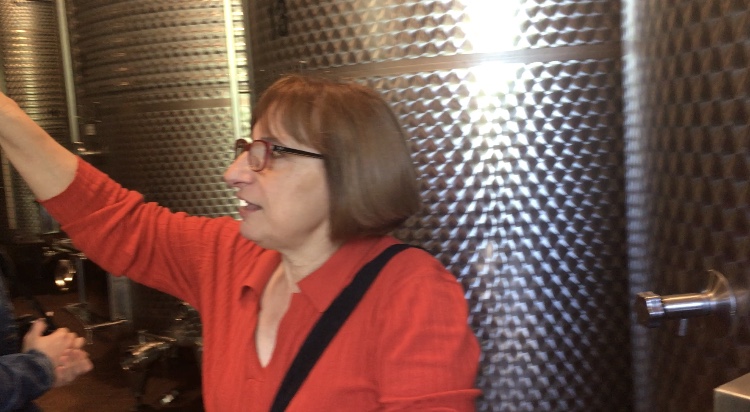
Listening to Graziella explain the process of winemaking at Cantina Neri
A terrific Moscato served to our class at Montanucci after our class on Italian desserts/pastries

Considering all the of the above paragraphs, I experienced many things that I hope to “take home” with me from Italy to the United States.  For one, I hope to take home the culture of taking my time with eating.  I hope to introduce this to my friends and roommates in Manhattan as well.  I hope to start making a lot more home-cooked sit-down meals in my apartment next year and inviting my friends to join me for a relaxed, leisurely, delicious meal.  I also hope to take home with me the culture of fresh, local foods.  As I mentioned in one of the above paragraphs, I currently live a classic college student’s diet and do not eat very fresh most of the time.  Although it might be a challenge for me, I hope to at least improve that a little bit by visiting the farmers’ market in Manhattan and buying some fresh, local ingredients.  Finally, I hope to take home with me the practice of tasting and evaluating wines.  I currently have a vlog channel on YouTube, so I am even thinking of implementing a “Wine of the Week” program where I evaluate a wine for all the elements we learned in class.  I also hope to pick out wines for my friends and family when they are having trouble knowing how to pair it with their food.

I definitely have a new perspective on certain aspects of my life after being here in Italy.  Beyond all of the things I mentioned in the above paragraphs that have changed my perspective, I have learned to appreciate a new culture and a new way of life.  This past month, I have grown used to living a life filled with significantly less “stuff” than back home.  My living space has been minimal, the items I brought with me were minimal, I have walked everywhere instead of having a car to drive, I have hung out my clothes on a line to dry instead of having a dryer, and since I haven’t been able to have a working SIM card for a while, I have not even had cell phone service.  I am BETTER because of all of these things!  It might sound strange to say, but I have really appreciated living without all the comforts of home, and I have realized which of those comforts are actually necessary and which I might be able to completely jettison once I return to the United States.  I am inspired to live a life of more walking, less trinkets, less accessories, less time spent on my phone, less excess of everything.  I think that making these changes in my life will actually lead to me being a happier person overall.  I have been great at appreciating the little things this month: a beam of sunshine, a cool breeze when it’s hot outside, a café latte from Montanucci, a glass of delicious wine, an evening stroll while breathing in the fresh, cliff-side air.
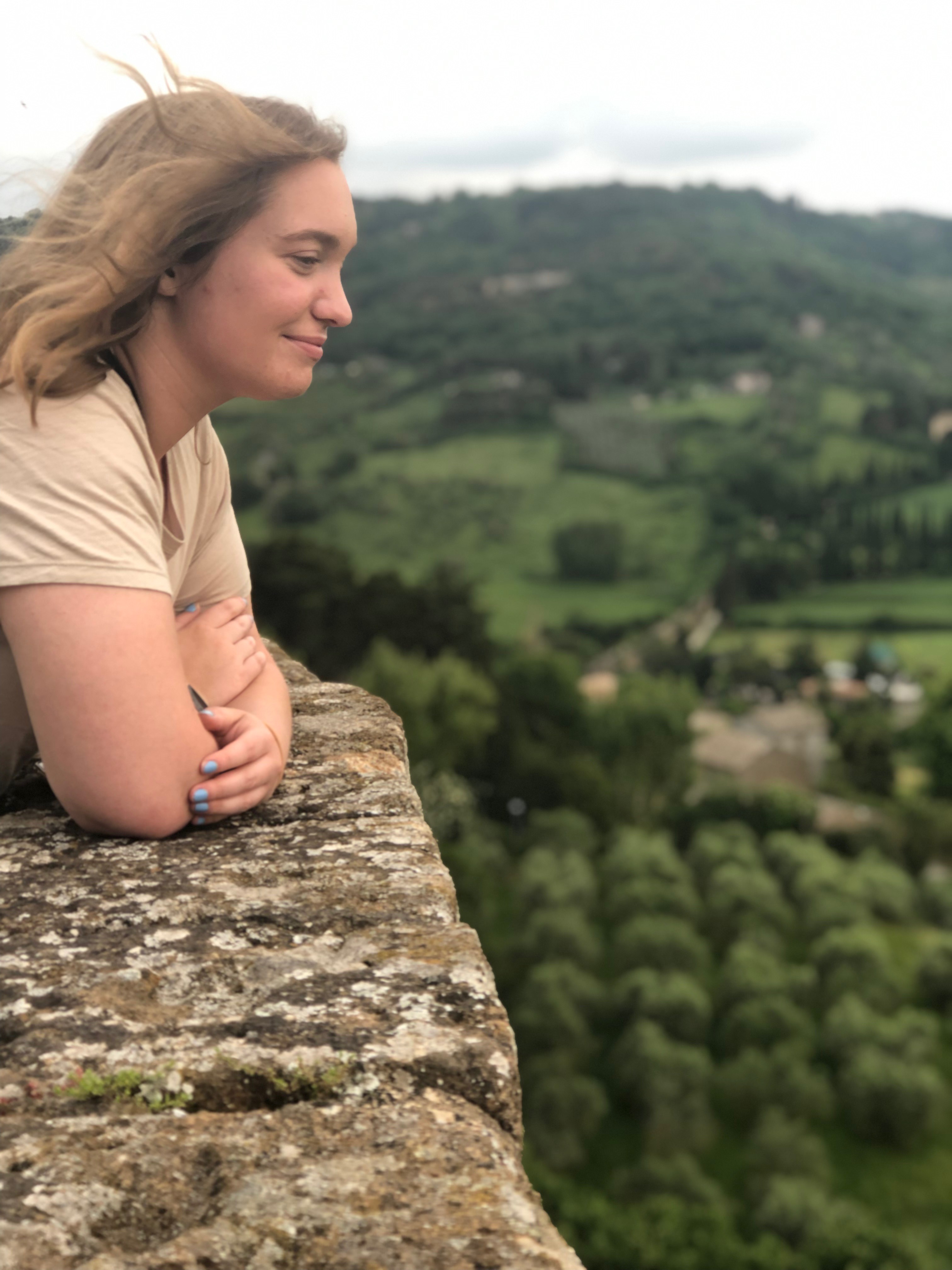
Appreciating the gorgeous cliff-side view in Orvieto

I am INCREDIBLY glad that I decided to take the Food and Wine class!  I wouldn’t have had it any other way.  I truly learned a lot and really hope to take my knowledge home with me and share it with my family and friends.  I started out taking this class because I have always been an adventurous eater/drinker and love to expand my horizons.  However, I have gotten more out of this class than I ever expected.  Learning how to taste wine and pair it with foods has been invaluable to me.  I think I will use this skill a lot in my future, whether that be on a personal level or a professional level.  Right now, I am also highly considering taking the wine class back at the K-State campus so that I can expand my knowledge upon the wines that we commonly drink in America.  My ultimate goal is to be able to taste a wine and blindly tell what kind of wine I am drinking.  I know it may be a lofty goal, but I believe I can get there if I actually put effort into this.  Another thing that I have taken away from the Food and Wine class is all the elements of dining etiquette, which I really appreciated learning and will be cognizant of in the future.
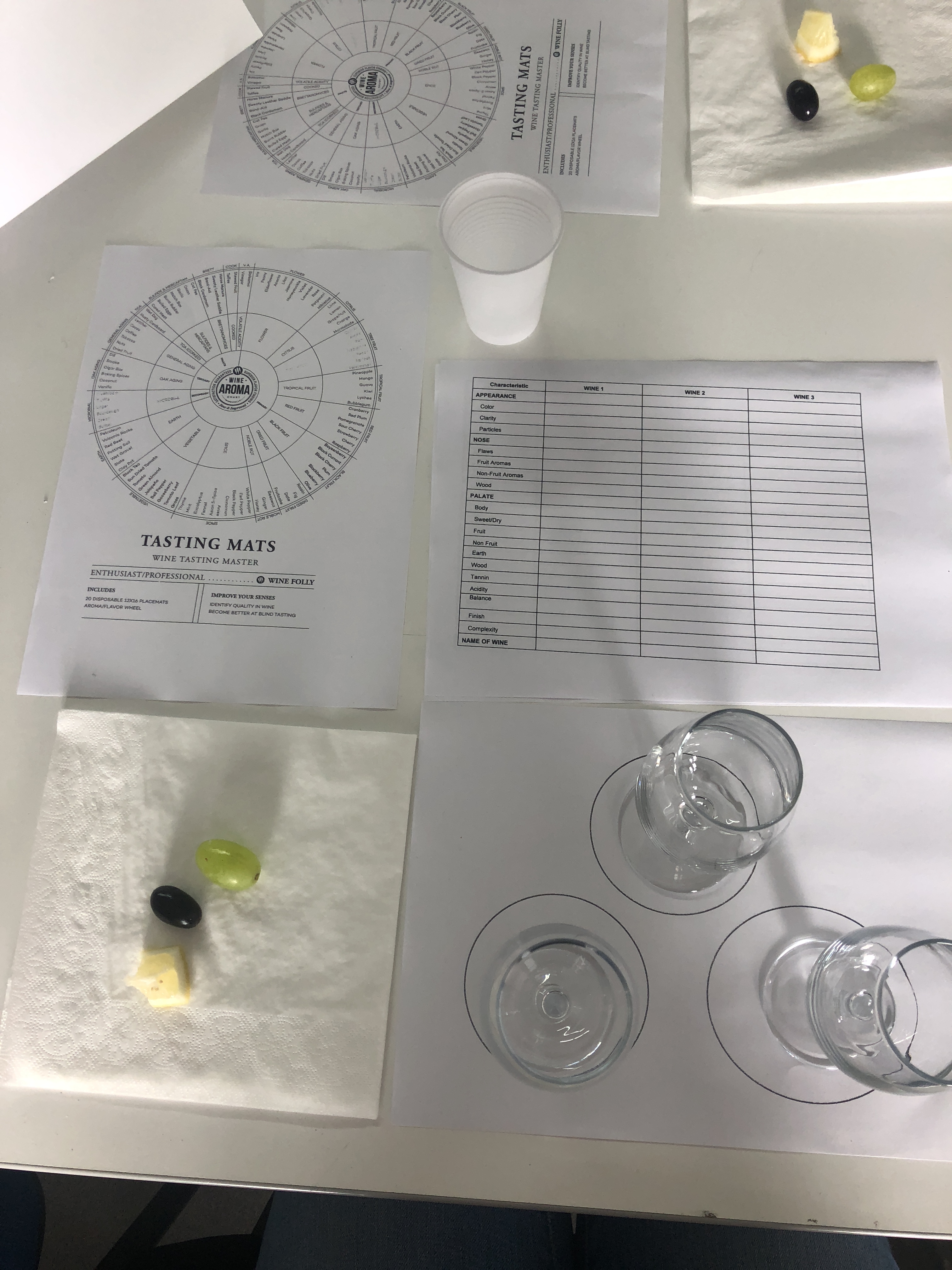
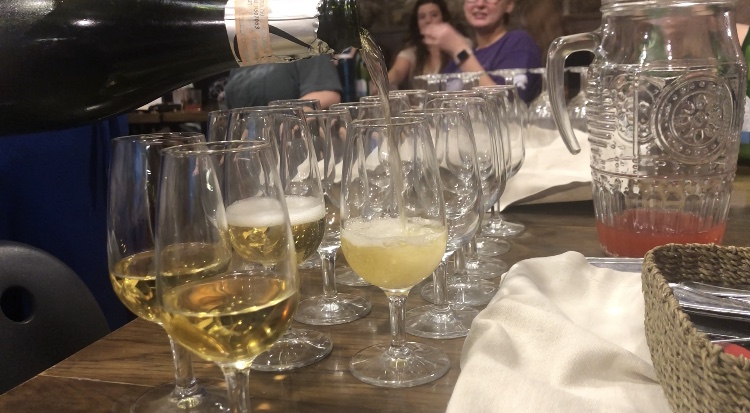
Preparations in Food and Wine class for our first in-class wine tasting of the summer

My absolute favorite part of the Food and Wine class was the day we spent touring wineries.  I learned so much, and the meal we had at Vitalonga was probably one of the top 5 meals I have ever had in my life.  My favorite part about it was that I got to try foods I never would have ordered on my own, such as truffle flan.  Truffle flan sounds so exotic and something I might be “iffy” on; however, it turned out to be one of the most delectable delicacies I have ever experienced.  Another reason why I really enjoyed that day is because I feel like everyone in our class was able to connect on a deeper level.  We branched out in our seating arrangements, got to talk with people who weren’t already our best friends in the class, and ended the day by singing together at the top of our lungs on the bus!  What an experience; to me, connecting with each other is what it’s all about.
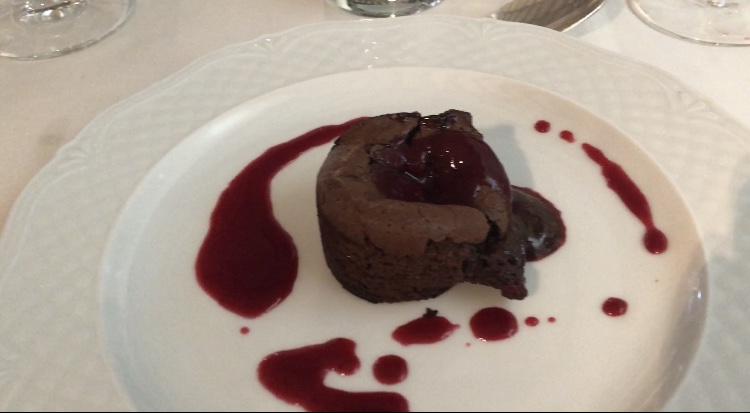
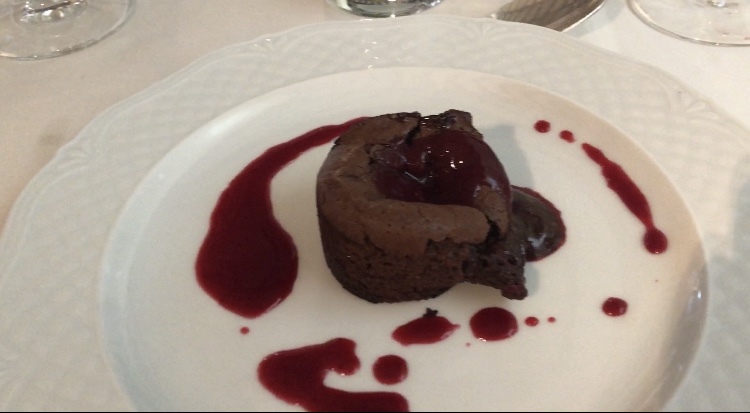
My favorite part of the meal at the winery: dessert! A delicious molten chocolate cake.
Having fun with classmates on the bus while traveling to Barbi

With all of that being said, I will miss Italy a lot and will never forget these people or this place.  I truly hope to make it back to Orvieto sometime.  In the meantime, Ciao Italia!
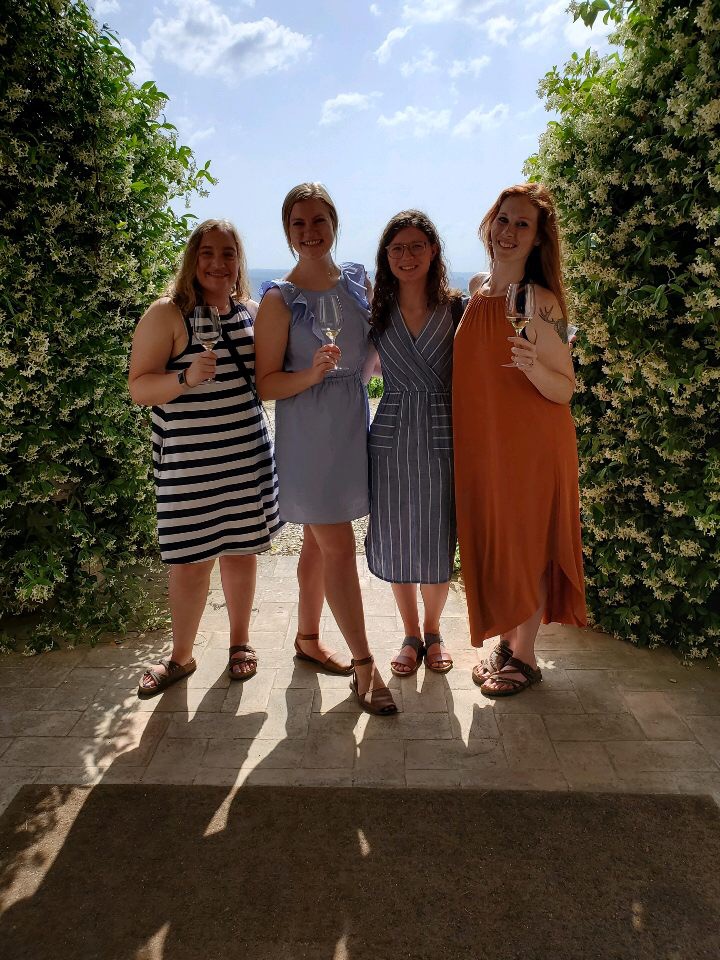
Three people that mean a lot to me: Kellie, Mercedes, and Kourtney. Here we are at Barbi trying some wine.
Mr. P and Dr. B: outstanding Food and Wine professors and very kind people from whom I have learned so much
Graziella: the perfect tour guide and go-to person for really anything, as well as an all-around sweet soul
Erin Wiersma: didn’t get to have her as a professor, but still grew close with as the month went on. Loved all of her restaurant suggestions!

Week Three: Details, Details, Details

Throughout this trip, I have had the opportunity to try many wonderful foods and wines, and recently I have learned how to properly pair foods with wines.  Although I am still attempting to perfect my wine pairing skills, I feel that Food and Wine class has given me a firm foundation on which to learn.  I will now share some examples of the foods and wines that I have paired throughout my time in Italy:

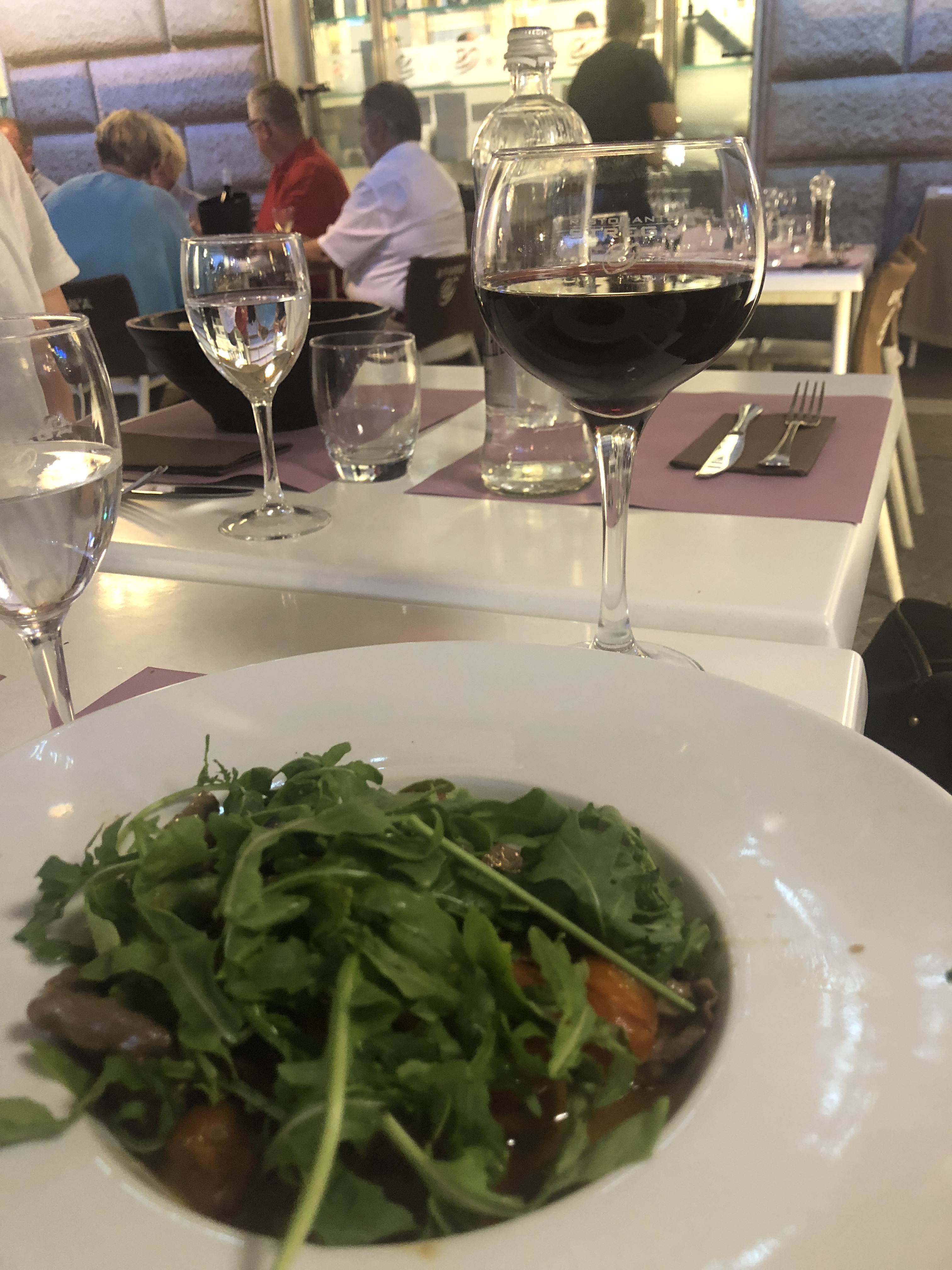
Food: Rocket salad with beef slices and roasted tomatoes // Wine: Chianti Le Cicale di Vincigliata Bibi Graetz 2017 // Location: Ristorante Strega in Rome

This wine is an IGT.  The varietal is Sangiovese grapes from the region of Fiesole.  The wine was a deep red and had long legs.  I could sense fruity aromas of strawberries, cherries and raspberries.  The non-fruit aromas included cloves and other herbs.  The fruit tastes included a strong sense of cherries as well as strawberries.  I could also taste cloves and spices and oak.  The wine had low levels of earth.  The wine was very dry and had medium levels of tannin.  The wine was well balanced and had a medium finish.  I liked the wine, especially for its good balance and dryness (my favorite element of a wine).  Overall, the wine paired decently with the meal.  The dryness of the wine brought out the umami of the meat; however, next time, I would probably choose a slightly sweeter red wine to pair with the meal in order to better compliment the sweetness of the tomatoes.

Rocket salad with beef slices/tomatoes as well as the Chianti wine at Ristorante Strega in Rome

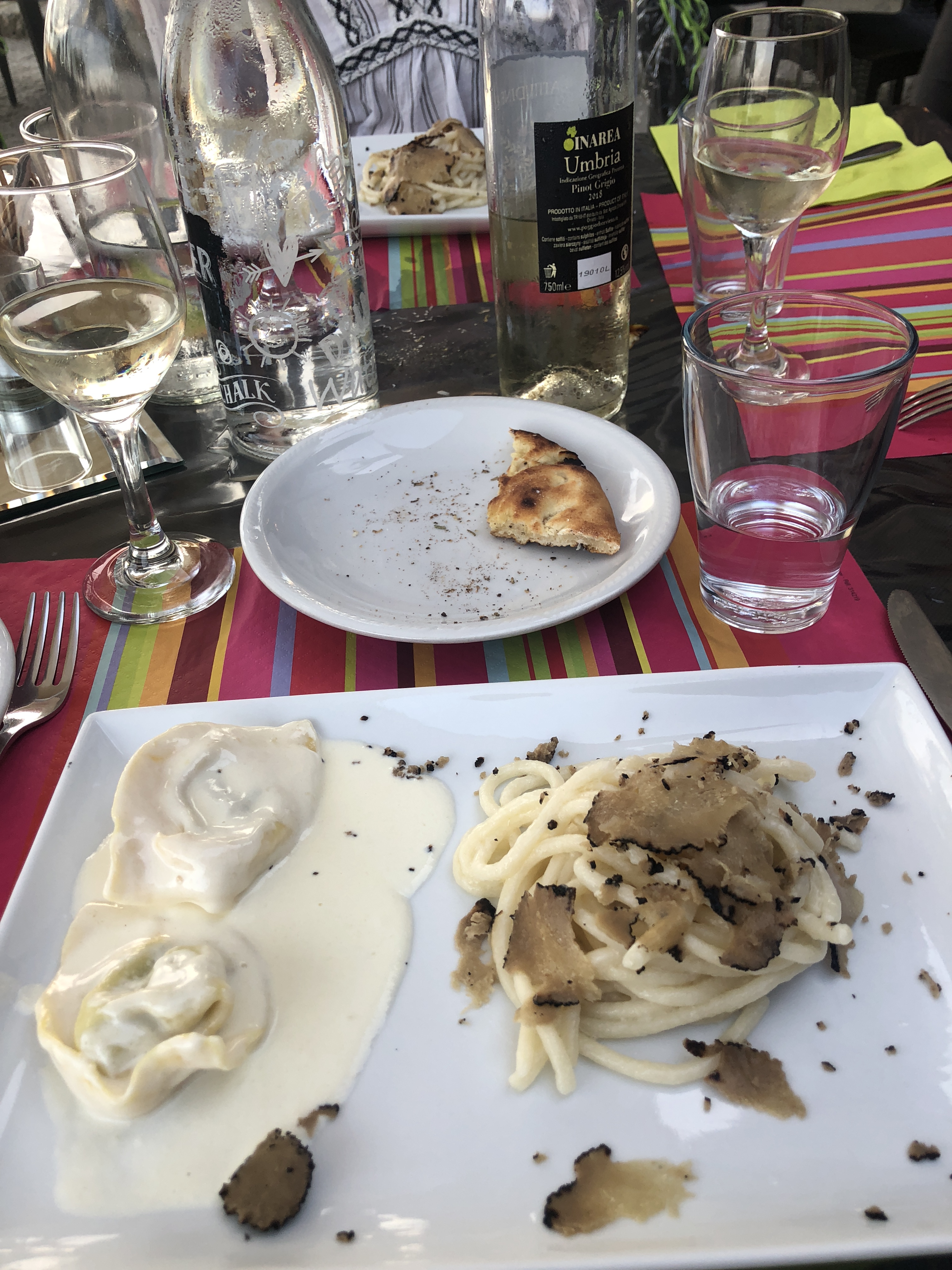
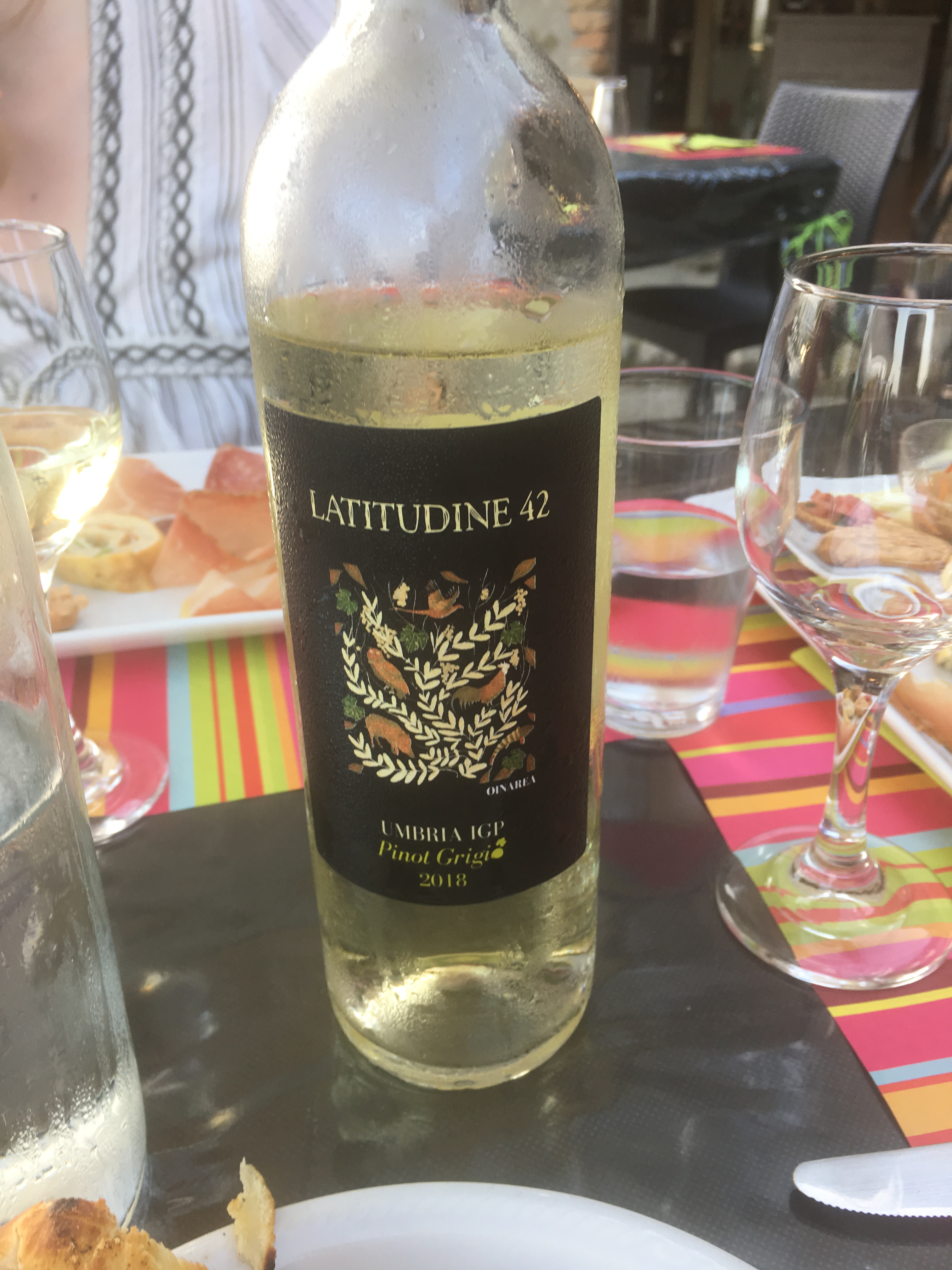
Food: Pasta stuffed with spinach and topped with parmesan cream sauce and Umbricelli with parmesan cream sauce topped with truffle // Wine: Lattidine 42 Umbria IGP Pinot Grigio 2018 // Location: Poggio di Orvieto

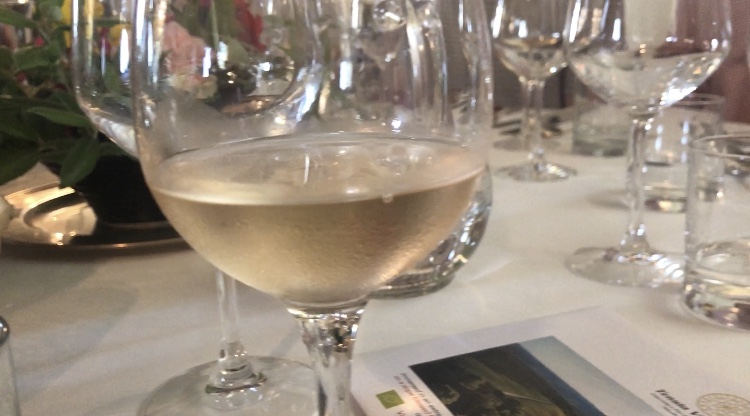
This wine is an IGP.  The varietal is exclusively pinot grigio grapes and comes from the Umbria region.  The wine was a light yellow color, practically a paper color.  Its fruity aromas included apple, pear, and pineapple.  Its non-fruit aromas included asparagus and green pepper.  The wine was fairly dry (somewhere in between dry and semi-sweet).  The fruit tastes included a strong sense of pear and apple.  The non-fruit taste that was the strongest was the asparagus.  The wine had medium levels of earth.  It was light, refreshing, and well-balanced.  It had a long finish.  The acidity was medium.  The wine was one of the best white wines I have ever had.  I really enjoyed it overall.  I think it paired very nicely with the pasta dish(es).  They were rich, creamy, and full of dairy and vegetables, which made the white wine fare perfectly with the pastas.  I would definitely pair this dish with this wine again in the future.

Pasta paired with Pinot Grigio wine at Poggio di Orvieto
Close-up of wine at Poggio di Orvieto

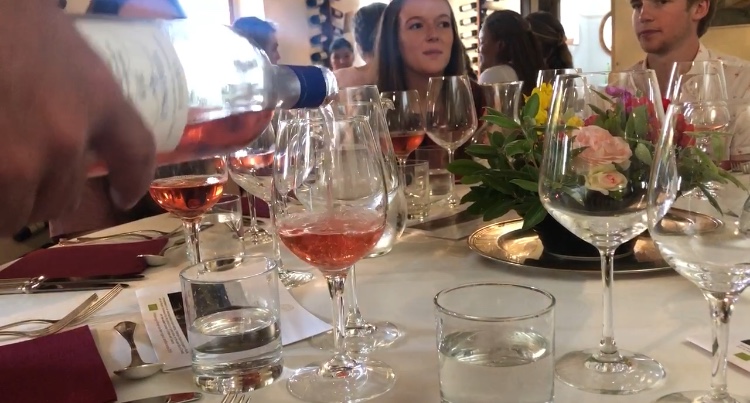
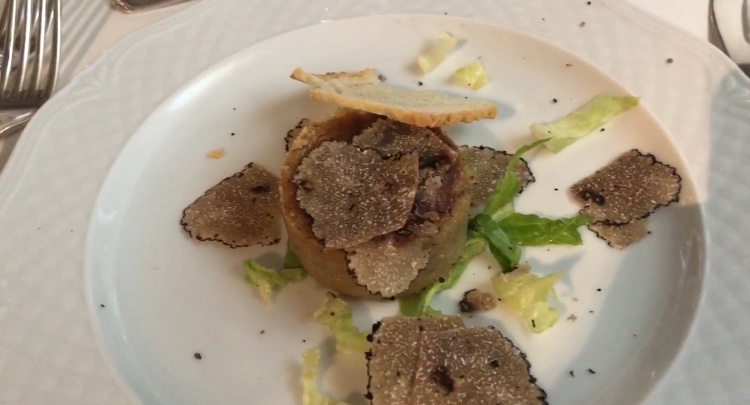
Food: Truffle flan with toast and garnish // Wine: Vitalonga Rosé // Location: Vitalonga

This Rosé is unique to Vitalonga because it is the first organically certified wine of the estate.  The wine is a light rose color, and it had medium legs. The fruit aromas include raspberry, grapefruit, and pomegranate.  The non-fruit aromas include flowers, especially red rose.  The wine was fairly dry, especially for a Rosé, and I loved that about it.  The fruit flavors were very heavy on grapefruit and raspberry.  The non-fruit flavors were floral, and I could also sense some type of vegetable, perhaps cucumber or some other light, fresh vegetable.  There was very little tannin in the wine, and it had low to medium levels of earth.  The wine had a full body and a long finish, which made for a very fresh tasting wine.  Overall, I really liked it, which was rare for me because I am usually not a big fan of Rosé.  This Rosé was more dry than I am used to in others; therefore, I enjoyed it.  The acidity was probably a medium.  I think that overall, the wine paired well with the truffle flan, which was light, cheesy, and delicious.  The flavors complimented each other well, and the wine cleansed the palate with each sip.

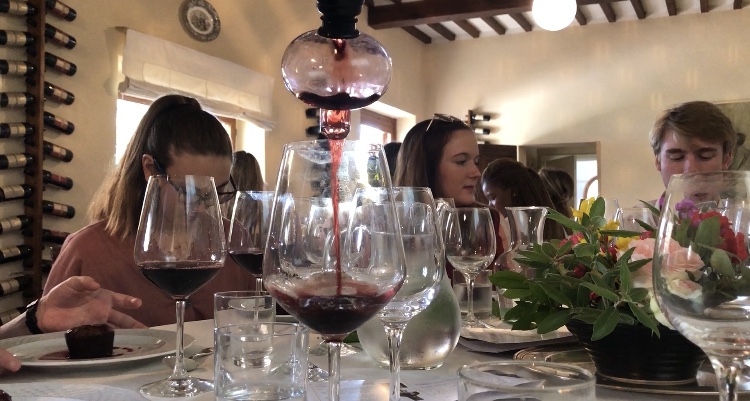
Rosé wine being poured at Vitalonga
Truffle flan at Vitalonga, which paired nicely with the Rosé

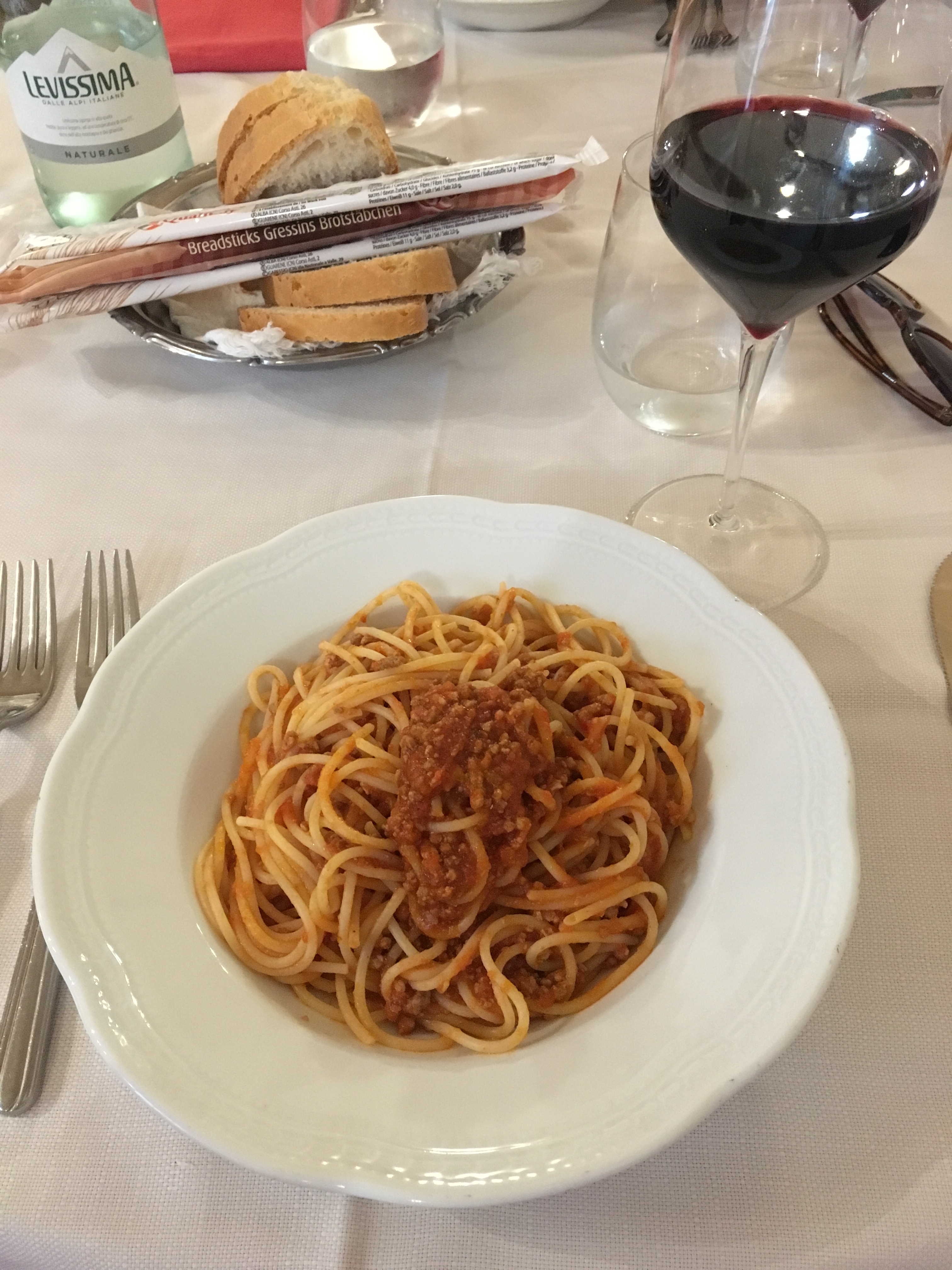
Food: Spaghetti al Ragu // Wine: La Capraia Umbria Sangiovese // Location: Trattoria La Grotta

This wine is an IGP and is made of the Sangiovese varietal.  It has medium-slow legs, and a bright red appearance.  The aroma of the wine was very fruity, and the fruit aromas included strawberries, cherries, and raspberries.  The non-fruit aromas included oak and perhaps a hint of smoke and leather.  I could also sense some spices, such as cloves.  The wine had the taste of red berries as well, especially cherries.  It was a dry wine with a small touch of sweetness.  The wine had a medium body and medium finish.  The wine also had a medium-high tannin and a medium-high acidity.  I enjoyed the wine overall and appreciated the amount of dryness to the wine.  I think that the wine paired well with the spaghetti overall.  The flavor of the beef definitely complimented the spiciness of the wine, and the wine had just enough sweetness to compliment the tomato sauce flavor.  I would pair this dish with this wine again.

Spaghetti al ragu paired with Sangiovese wine at Trattoria La Grotta

Food: Molten chocolate cake with raspberry ganache // Wine: Vitalonga Phiculle // Location: Vitalonga

This wine is an IGT from Umbria.  It is made up of the grape varietals Sangiovese, Cabernet Sauvignon, and Cabernet Franc.  The appearance of the wine is a dark ruby red. The wine had a lot of legs.  The fruit aromas of the wine included currant, black cherries.  The non-fruit aromas included balsamic, spices, cloves, and smoke.  It was a dry wine and had a high amount of tannin.  The wine was full-bodied, and the acidity was medium.  The finish was long, and the body was full.  The wine was overall very refreshing.  I really enjoyed it; I thought the flavor of balsamic was unique, and the wine had a sort of richness to it that pleased my palate.  With that being said, I don’t think I would have chosen to pair this wine with the chocolate cake.  I think that desserts should be most properly paired with dessert wine, and the wine should be sweeter than the dessert.  This wine was definitely not sweeter than the dessert; therefore, next time I would choose a sweeter wine.  Perhaps a nice Vin Santo!

Phiculle wine being poured at Vitalonga
Molten chocolate cake with raspberry ganache at Vitalonga

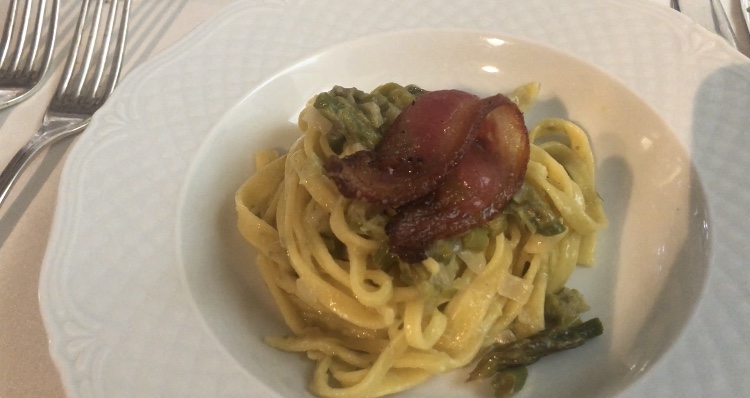
Food: Pasta with cream sauce, asparagus, and bacon // Wine: Vitalonga Chardonnay // Location: Vitalonga

This appearance of this wine is straw yellow.  The fruit aromas of this wine include ripe tropical fruit, especially pineapple and perhaps some mango.  There are also some lighter notes of citrus fruit such as grapefruit and lemon.  The non-fruit aromas of the wine include vanilla and hazelnut.  The wine had a nice medium body.  It was well balanced and very refreshing.  There were no tannins in the wine.  The fruit tastes of this wine included pineapple and grapefruit.  The non-fruit tastes of this wine included hazelnut and vanilla.  The acidity on the wine was medium-high.  The finish was long and left a pleasant taste.  Overall, I really liked the wine and it was one of my favorite whites that I have had.  It really refreshed me and cleansed my palate.  I also think that the wine paired nicely with the food.  The pasta, which was light and creamy, paired nicely with the light wine and tropical fruit notes.

Chardonnay at Vitalonga
Creamy pasta with asparagus and bacon at Vitalonga

Week 2: Tastings

MONTANUCCI TASTING:

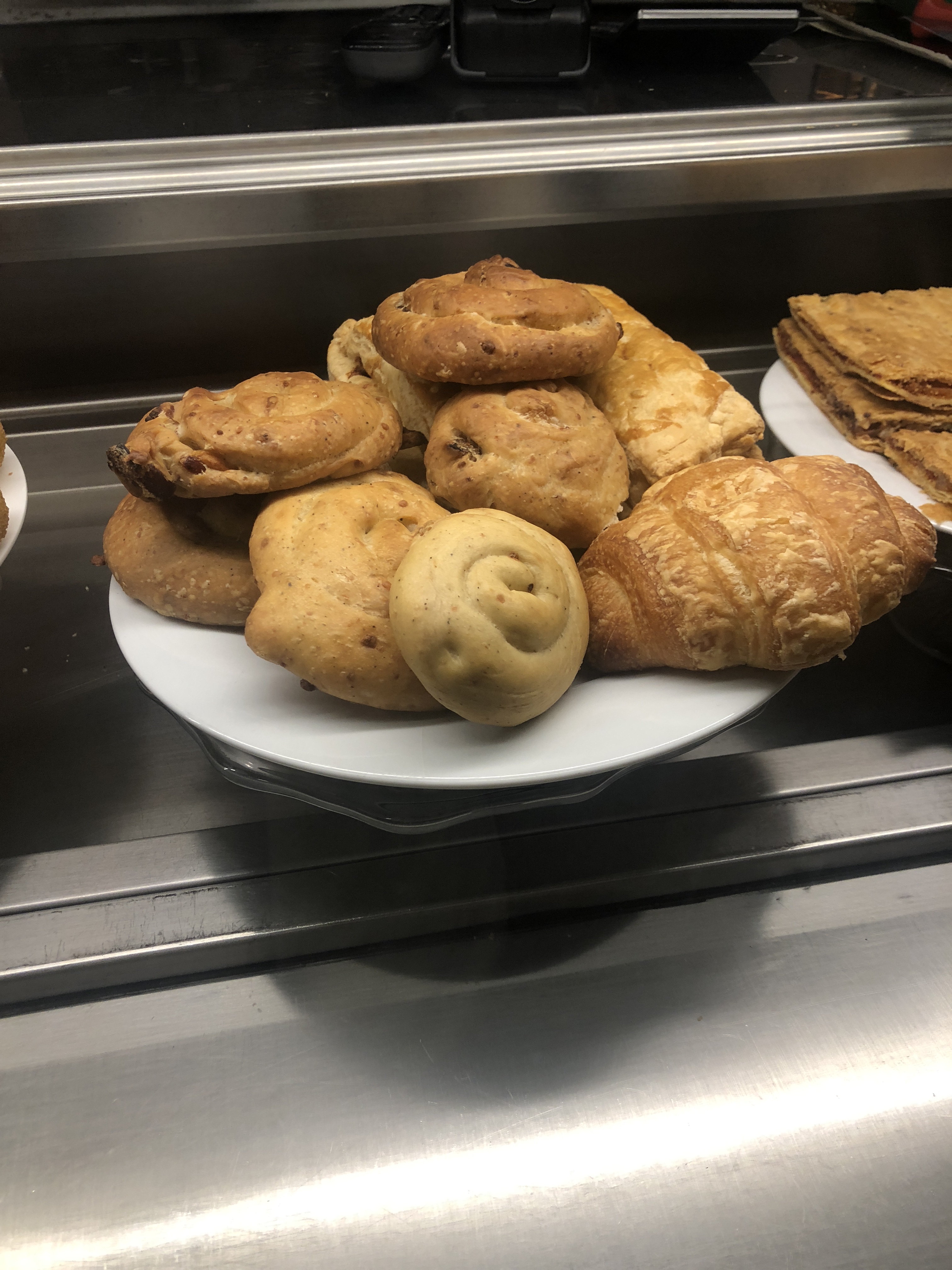
This summer in Italian Food and Wine class, we have had the opportunity to engage in multiple tastings.  The first one of this week took place at Montanucci.  It was incredibly interesting and heartwarming.  The pastry chef, Mr. Gambelli, has been working at Montanucci for about 50 years, and I loved hearing his words of wisdom about baking. I also loved bartender Slavik’s electric/engaging personality.  The first item we tried during the Montanucci tasting was a savory scone with bacon.  Mr. Gambelli rolled out the scones in very specific ways in a “snail” shape.  The savory scone was very pleasant to eat; it has just enough flavor and I love the hint of bacon in it.  The other day, I went to Montanucci and got one of these scones served warm.  They were even better that way!

Savory scones at Montanucci. The one we sampled is the spiral/”snail” shaped one in the front.

The next item served at Montanucci was a shortbread cookie.  The mix for this shortbread cookie is the base of many pastries made at Montenucci.  Mr. Gambelli chose to shape his shortbread cookies in a certain way and told us that each person has a signature shape of cookie.  The taste of the cookie was very nice—it was flavorful, just the right amount of sweetness, and kind of melts in your mouth.  Additionally, the cookies can have certain fillings such as apricot, cherry, or chocolate.  My favorite was the apricot.

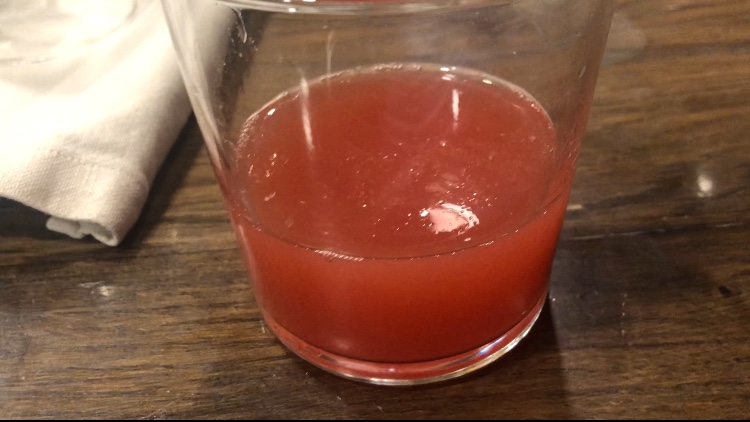
Another item served to us at Montanucci was an Aperitif made by Slavik.  According to Slavik, it contained red orange juice, grapefruit juice, pineapple juice, strawberry syrup, and Aperol.  Since Aperol is one of my favorite liquors, I adored the Aperitif.  It was probably my favorite tasting of the evening.  It had a very fruity, tropical appearance, smell, and taste.

Slavik’s Aperitif creation

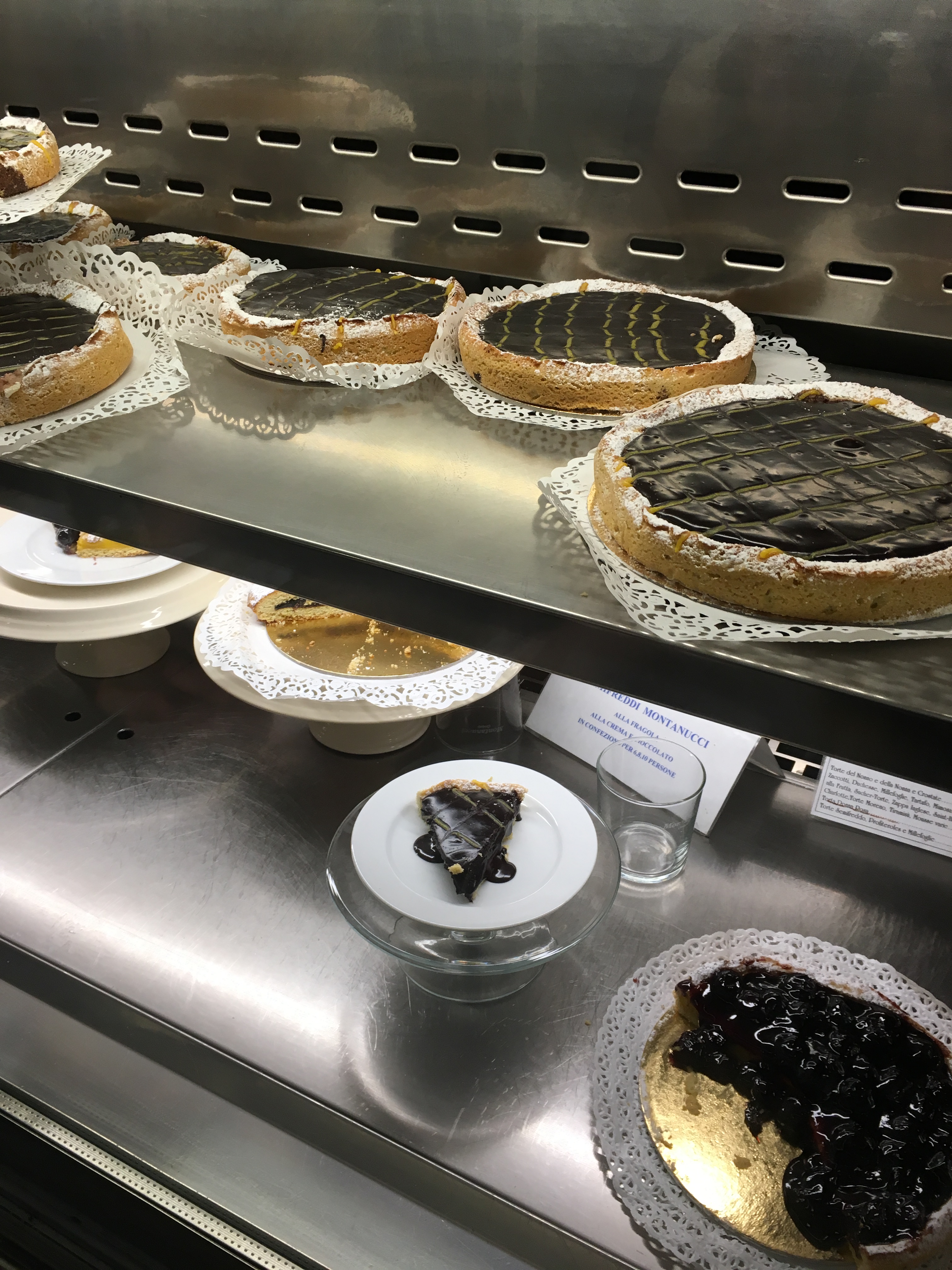
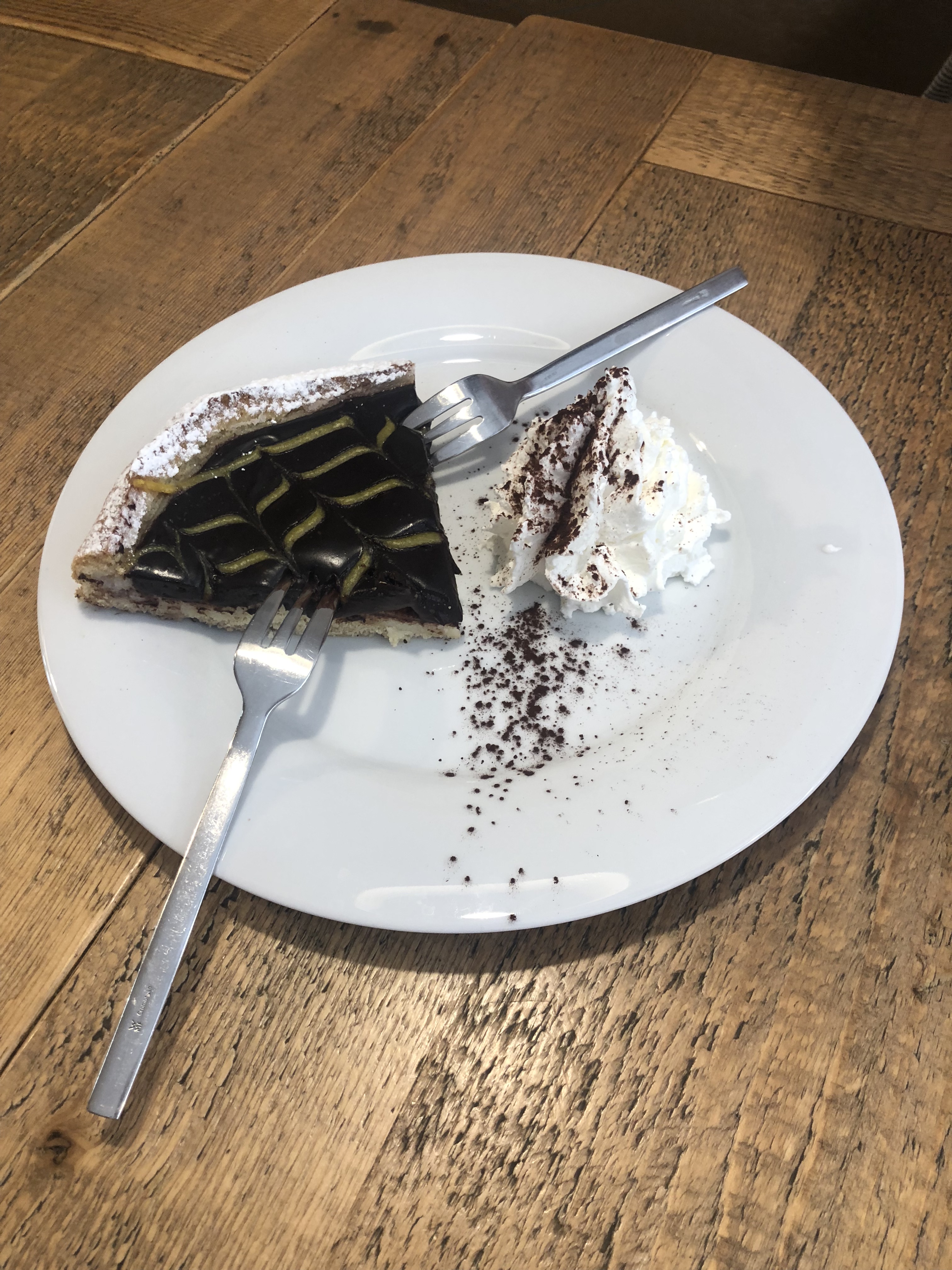
The fourth tasting of the night, and definitely another favorite of mine, was a slice of Semolino cake.  The Semolino cake is a classic dish from Montanucci.  It is a cake composed of three layers: the bottom layer is a shortbread crust, the middle layer is a custard, and the top layer is chocolate mixed with heavy cream.  According to Mr. Gambelli, the top layer of the cake is correctly made if it creates a mirror (shiny texture) on the top.  The cake was scrumptious because all of the layers balanced each other out; no part of the cake was too sweet.

Semolino cake (top shelf) in pastry case at Montanucci
Slice of Semolino cake at Montanucci

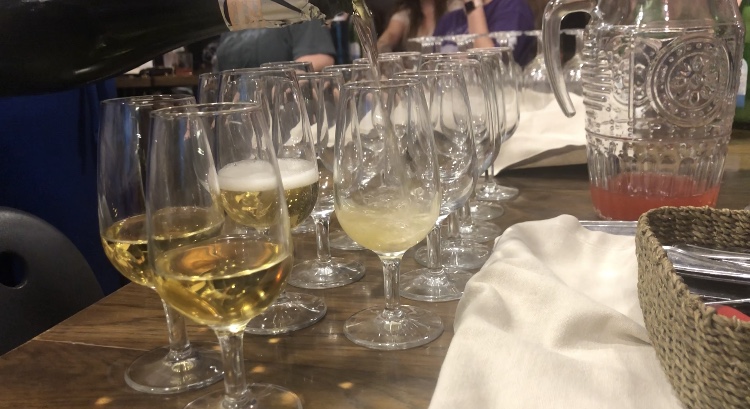
Paired with the Semolino cake was a fabulous dessert wine.  The wine was called Cascina Fonda Driveri.  It was a 2005 Metodo Classico Dolce.  Along with most dessert wines, it had a beautiful golden color and was syrupy in consistency.  The golden color means that the wine was older, and considering it was from 2005, it certainly had been well aged.  Additionally, it was sparkling and had a perfect amount of bubbles.  Within the wine, I could taste notes of tropical fruit like pineapple. I thought that the dessert wine paired perfectly with the Semolino cake.  They each brought out flavors in the other, and the fact that the wine was sparkling helped cleanse my palate with each bite.  Additionally, the sweetness of the wine complimented the cake, and the sweetness of the cake complimented the wine, which is the exchange that should take place with any good dessert wine.

The 2005 Cascina Fonda Driveri being poured for tasting

ARONNE

Christian took us through a wonderful tasting of meat, cheese, and wine on Tuesday night at Trattoria Aronne del Moro.  We were able to taste three types of prosciutto.  The first was the sweetest and was from the region of Bologna.  I loved the texture and the amount of sweetness in the meat; however, once we moved on to the second meat, a local semi-sweet prosciutto from the Orvieto area, I realized that I loved it even more.  With that being said, my favorite meat was definitely the third prosciutto.  It was thicker and saltier than the others and had a sort of beef jerky texture.  It was absolutely scrumptious.

The fourth type of meat that we tried was lard.  I was a bit nervous to try the lard because I had been served lard in a restaurant a few nights prior and I wasn’t a fan of it all.  Thus, I was very hesitant.  With that being said, the lard was a lot better than I thought it would be.  As Graziella explained to us, the lard is served on warm bread so that it can melt a little bit and so that the greasiness of the meat can be balanced out.  It was certainly well balanced and turned out to be my second-favorite meat of the night.

Along with the meat, we were served a wine.  The wine was a prosecco and was a frizzante.  The wine was slightly sweet and was a good pairing for our meats because the bubbles in the wine cleansed the senses with each taste.  It seemed to be a younger wine because it was a lighter color than the golden color of the dessert wine at Montanucci.

During the second half of the tasting, we were given several delicious types of cheese.  The first was a buffalo mozzarella drizzled with olive oil.  As Christian told our group, before eating mozzarella, one must press into it and see if milk comes out.  If so, it is a good mozzarella.  I definitely enjoyed the buffalo mozzarella, although I will admit that the texture is not my favorite, so it was probably not my favorite of all the cheeses.  However, it did have a light, fresh taste, and the olive oil drizzled atop it only intensified that freshness.

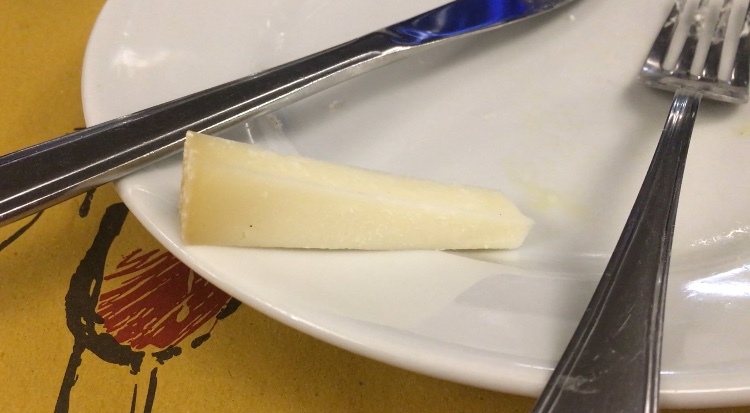
The second cheese was my favorite cheese of the night.  It was a pecorino made with pasteurized milk.  It was creamy, smooth, and relatively soft (compared with the cheeses we tasted after).  I loved the light taste.  The third cheese was another pecorino—this time aged for longer and exclusively in a cellar, as well as made with unpasteurized milk.  As we learned during the tasting from Dr. B, it is actually illegal to make unpasteurized cheese in the United States.  Thus, tasting this cheese was a special experience.  It was definitely stronger than the other pecorino, and it had a musky taste that to me tasted JUST like a cellar or other dark, damp area.  I enjoyed the second pecorino, but due to its intensity and dense texture, I enjoyed the first pecorino more.

The second pecorino made with unpasteurized milk

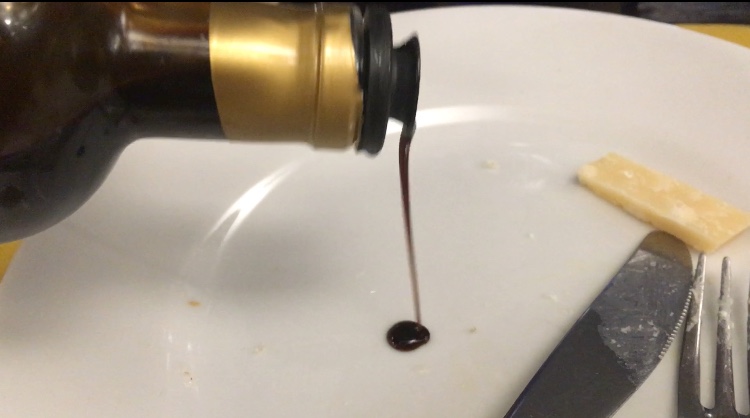
The next cheese was a parmigiana reggiano.  It was served to us in a smaller quantity than the others due to the strength of the cheese.  It was also served with some true balsamic vinegar, which was thick, sweet, syrupy, and had been aged for decades.  On its own, the parmigiana reggiano was quite strong for me.  It was a dense, hard cheese; however, the sweetness of the balsamic complimented it perfectly and made it highly palatable for me.

Parmigiana reggiano with balsamic vinegar

The final cheese was a gorgonzola.  I was nervous to try the gorgonzola once it was described by Graziella as a “cheese we might not like so much.”  Additionally, after hearing about all the molds inside the cheese, and the fact that the molds gives the cheese its green chunks, my stomach was churning.  I did not care for the gorgonzola cheese very much, but I am glad I tried it because it is quite a delicacy to many people.  I am sure that I could learn to love it; however, any mention of “green molds” gives me an upset stomach.  I do love keeping an open mind, though, and the gorgonzola cheese was interesting.  It had an incredibly strong and distinct taste, yet it was also very soft and was spooned onto a plate by Christian.  I am glad that it was a part of the tasting because now I can say that I have tried gorgonzola.

With the cheeses, we had a second wine.  It was a red wine and was a spumante.  It had notes of strawberry and cherry. The red wine was my favorite of the two wines from that night.  Spumante is different from frizzante because it is more fizzy.  Additionally, the carbonation is added later and was not originally a part of the wine.  The wine was dry with a strong finish and a medium-high tannin.  Since I love dry red wines out of any type of wine, I loved it; the carbonation only made it more palatable for me.

ADDITIONAL TASTINGS:

In our Food and Wine classroom, we had a “mini tasting” of sorts when we received a sample of a salami containing truffle and later a pecorino cheese containing truffle in the market.  Surprisingly, I loved both the meat and the cheese.  Truffle is such a versatile food.  It complimented the meat incredibly well and went perfectly with the richness of the pecorino cheese.  I will be ordering truffle again in the future.

I have used these tastings to my advantage because I now feel more highly educated about certain types of cheese, wine, and meats.  I now know that I love pecorino and cannot stand gorgonzola.  I now know that I love dry, red wines and enjoy the tannin sensation.  Information like this is extremely useful when ordering in restaurants.  I am at the point where I am able to order an antipasti plate and pretty much know what all of the things are on it.  Additionally, I have used these tastings to my advantage because my fear in trying certain foods is gone.  I am no longer afraid of words like “lard” or “gorgonzola.”  These tastings have also helped me in the grocery store because I have been better able to pick out types of wine for our apartment, or if needed, ask for wine suggestions from store owners by describing the general types of wine I like (red, dry, etc.). 

Week 1: The Culture of Dining

Hello there and welcome to my first official blog post! Having been in Italy for close to two weeks now, I have encountered many new things and have had numerous lovely, breathtaking, and humorous experiences. I absolutely love learning about new cultures, and I greatly admire and appreciate the Italian way of life. I wish I could stay here forever. One of the biggest parts of Italian culture, and my personal favorite part, is their relationship with food and wine.

Back in the United States, when we decide to go out to eat at an average chain restaurant, it is the norm to have an experience similar to this: We are quickly ushered in, seated at a nearby booth, and handed an huge (and often sticky) menu to quickly peruse before giving our order to the waiter, who has been running around crazily and juggling many tables at once. We are brought a big glass of complimentary water chalked full of ice and then given the opportunity to order other drinks for a cost, such as Pepsi products out of a soda machine or a cocktail, beer, or wine for those over 21. We then give our order to the waiter, and he or she communicates the message to the kitchen. More often than not, the food will be prepared by heating up something that has been canned, frozen, and/or pre-prepared. After the meal, the waiter often comes by and asks if any to-go boxes are needed, after which he brings them, and we pack our inevitable leftovers (since the portion sizes were huge) in styrofoam containers to take home and reheat the next day. The waiter then brings the check and states that “this is for whenever you’re ready to pay,” but what he really means is, “it’s almost time for y’all to head out.” We leave a 20% tip, and then quickly vacate the restaurant so that we don’t continue to take up the table.

In Italy, however, the dining experience is drastically different. The two
country’s dining experiences do share a few basic things in common, of course,
such as coming into the restaurant, sitting at a table, ordering off a menu,
and being brought your food to eat. Beyond that, though, the dining experiences
differ greatly. For one, there is virtually no such thing as a “chain
restaurant” in Italy. Restaurants are completely local and serve dishes
that are specific to the region. Everything is prepared fresh in the
restaurant, and ingredients for the dishes are also purchased and/or grown
locally. Diners are encouraged to take their time in the restaurant. They are
never rushed, and the check is only brought to the table once the diners have
clearly indicated that they are finished and ready to leave. Even then, the
check may take an additional 15-20 minutes to arrive. Additionally, a tip is
never expected, and there is not even a spot for a tip on the receipt. Instead,
a 2-Euro fee is included on the ticket, which pays for the diners to
“rent” the table for as long as they wish to stay in the restaurant.

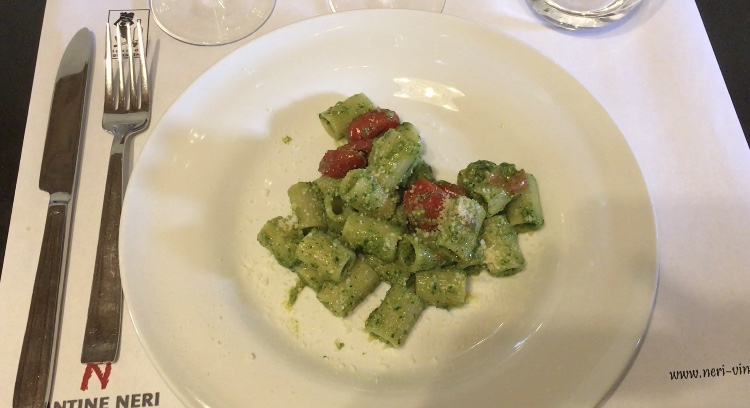
Out of all the elements of Italian dining culture, the element that has piqued my interest the most is the way the chef carefully prepares the meal to be eaten right there, as-is, inside the restaurant. Part of that includes what the chef considers to be the perfect portion size. The meal is meant to be enjoyed and to be finished completely; the plate is neither designed to leave you hungry nor stuffed. Thus, it is seen as rude or troublesome to leave food on the plate, and it is a sign to the waiter and the chef that the food was not good. Additionally, to-go boxes are never provided during the Italian dining experience due to the fact that the chef aims to provide the perfect portion size for one serving. This is drastically different to American dining culture because the portion sizes in America are often monstrous; unfortunately, I am someone who is prone to overeating, especially when dining out. Dining out in Italy never leaves me feeling bloated or miserable because the portion sizes are much more appropriate.

This pesto pasta from Cantine Neri illustrates an Italian serving size that leaves you feeling satisfied but not stuffed.

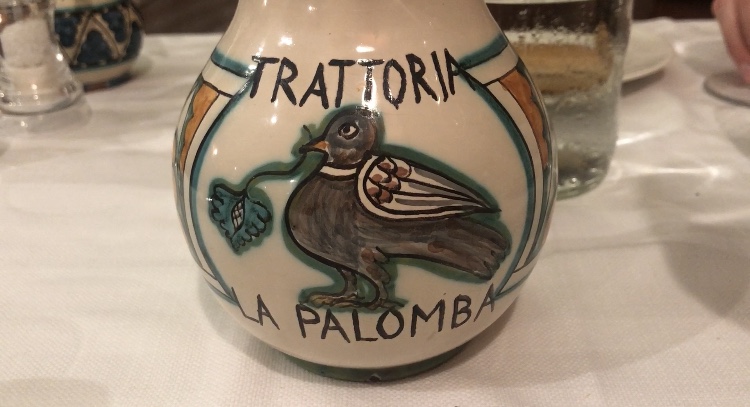
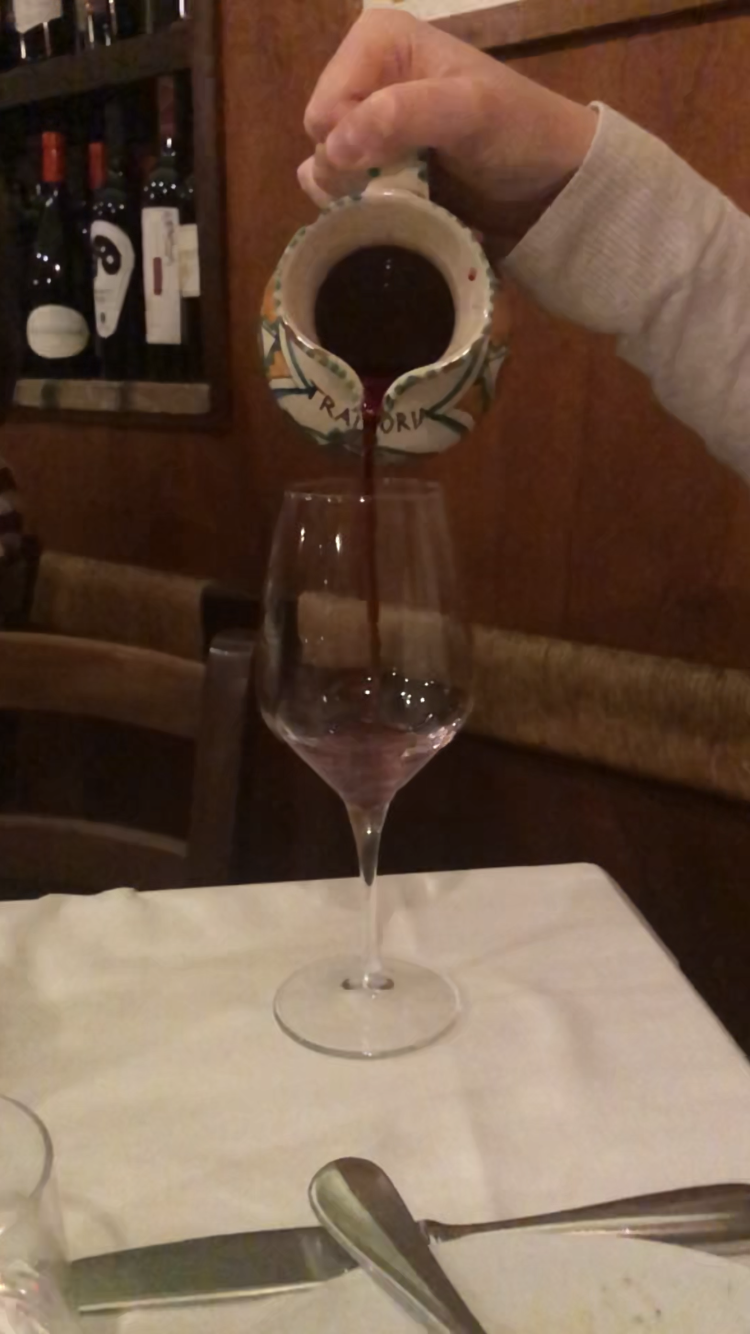
Another element of dining culture in Italy that greatly interests me is the wine aspect. While in America (especially in the college town of Manhattan) we may witness college students guzzling cheap wine in an effort to get drunk, wine is never for binge-drinking in Italy. In fact, binge-drinking does not seem to be an extremely prevalent issue in Italy. One glass of wine is meant to be sipped and enjoyed with each meal; it is considered an automatic part of a meal and compliments the food perfectly. If one finishes their wine before their meal in Italy, the waiter will not likely come to the table and ask, “Another one?” as is often practiced in America. A glass, ONE glass, or a bottle to share with the table, is ordered at the beginning of the meal as soon as the food is ordered. Most restaurants have a house wine available, which is a cheap yet still good wine meant to compliment the food at a restaurant. Italians normally do not drink this wine on its own.

At the local Trattoria la Palomba, house wine is served in a beautiful hand-painted pitcher.
Here is the house wine being poured at Trattoria la Polomba.

I have witnessed the impact of Slow Food at many restaurants in Orvieto. Additionally, I have had the opportunity to visit several of the Slow Food certified restaurants here in town. The Slow Food movement is all about using locally grown/farmed ingredients for cooking and serving. Due to this movement, I have witnessed a great pride for the food served in restaurants that we do not possess as highly in America. Additionally, I have personally felt a shift in the way I have been eating here in Italy. I have left the restaurants feeling refreshed, healthy, and confident about the foods I am putting into my body. I am very passionate about using locally grown ingredients at home in Kansas as well, but they are not as widely available and are very expensive. Thus, I am a big fan of the Slow Food movement here in Orvieto, and I am proud of the food I have been eating.

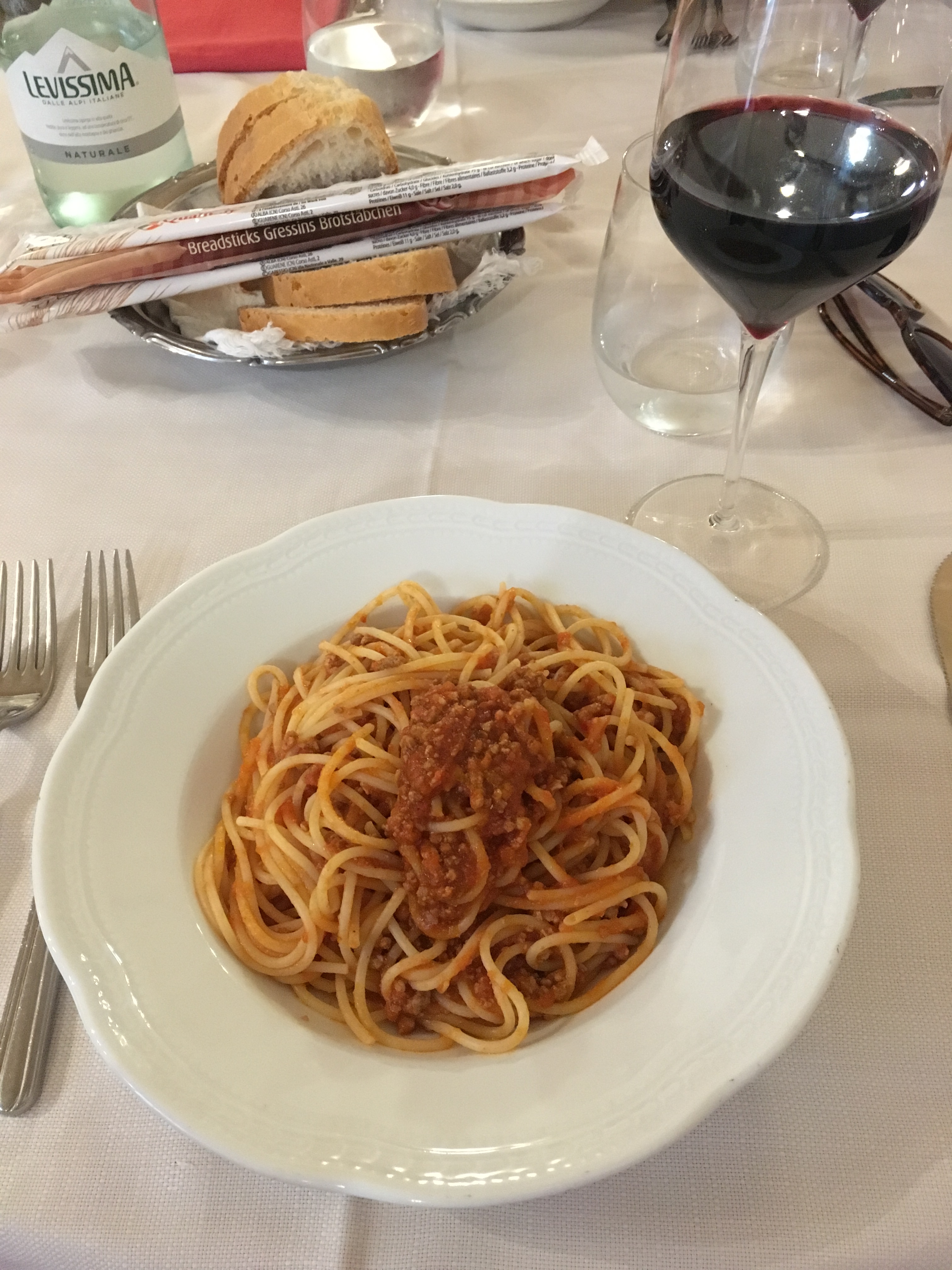
Spaghetti and house wine from one of the Slow Food certified restaurants in Orvieto, Trattoria la Grotta

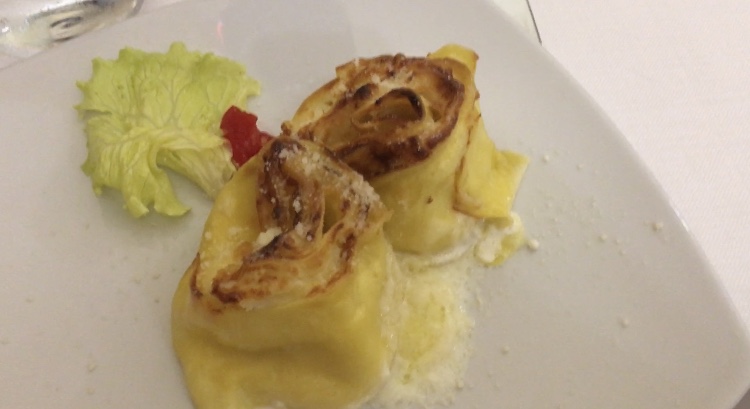
I have not been served a single “bad’ meal here in Orvieto. All of the restaurants I have visited have been fabulous. However, out of all of them, my favorite has been the nidi at Trattoria del Moro Aronne. I have now dined here twice since being in Orvieto, and both dining experiences have been incredible. We were recommended this restaurant (and this dish) by Erin Wiersma, one of the professors of KSU in Italy. As soon as I took a bite of this fabulous and unique dish, I knew that I could always trust her recommendations. I enjoyed the meal due to its perfect portion size, use of local/regional ingredients, and welcoming dining environment. I will be returning to this restaurant many more times before departing Orvieto.

Nidi: handmade pasta stuffed with pecorino cheese and topped with drizzled honey

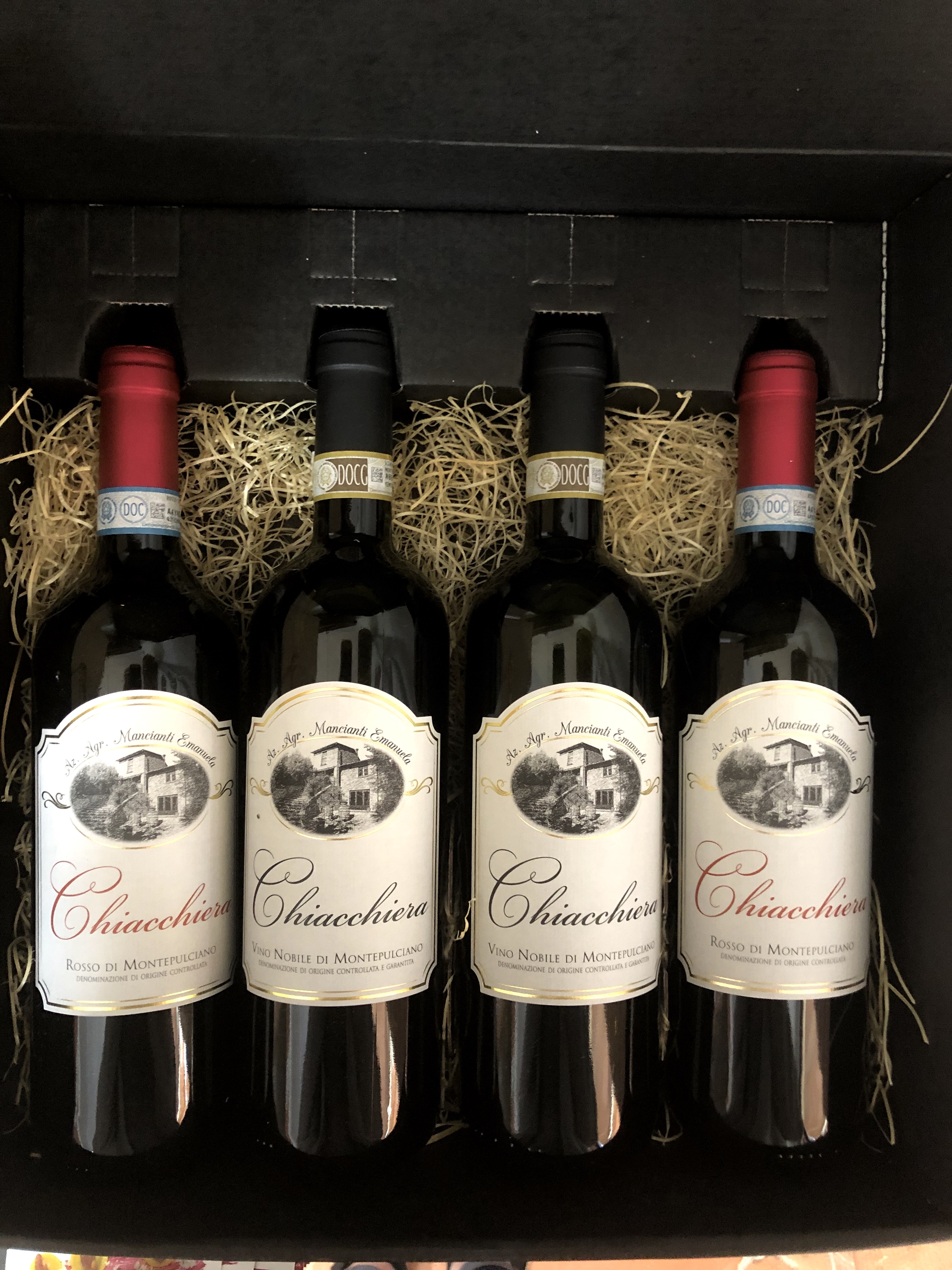
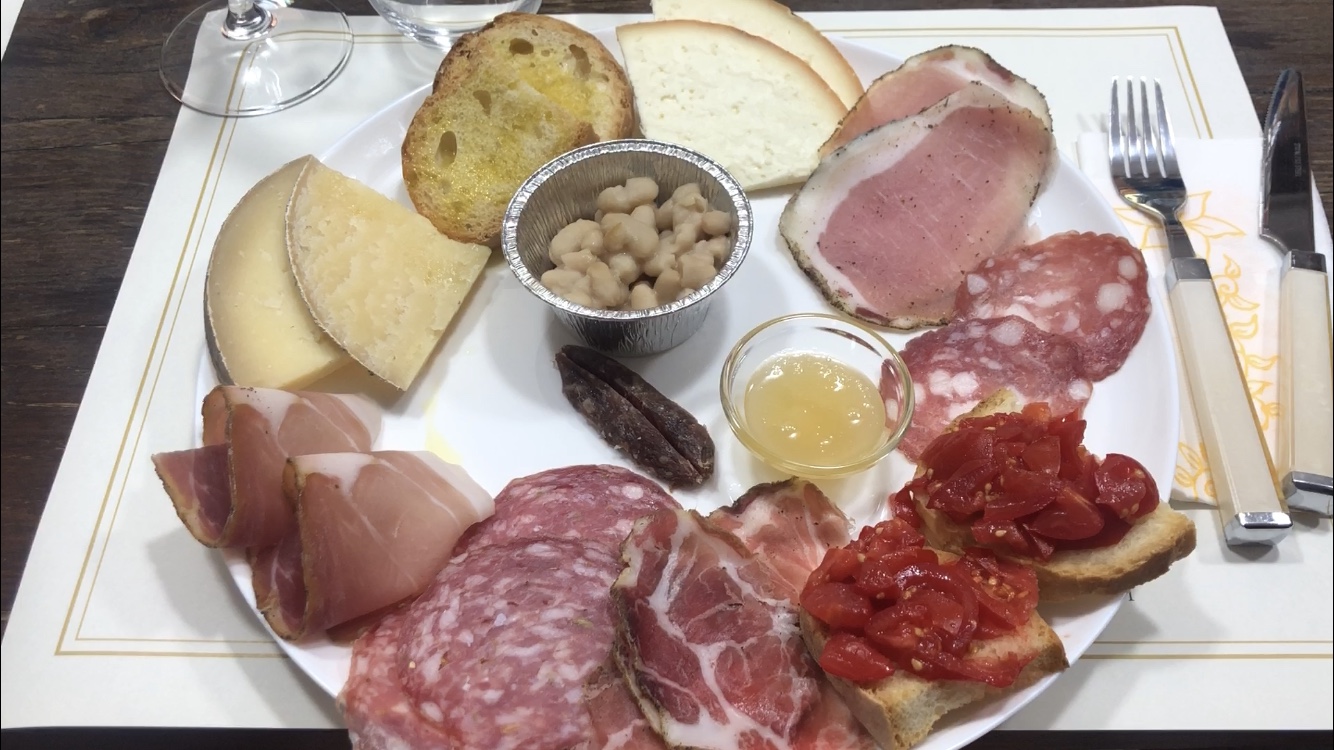
Over the weekend, I traveled with Kellie Deutsch from Orvieto to the nearby Medieval town of Montepulciano. We decided on this specific town not only because we heard that it is a gorgeous place, but also because it is known for producing fabulous and highly esteemed varieties of wine. (In fact, I was served a delicious Montepulciano classico in Trattoria del Moro Aronne!) The food in Montepulciano was generally the same as the food in Orvieto, but while traveling, we did have an opportunity to tour a winery 6km from the Montepulciano city center by the name of Cantina Chiacchiera. Since no one else signed up for the tour that day, we ended up getting to have a private tour of the entire farm with a very knowledgable and kind tour guide. We learned about how the grapes are grown, how the wine is fermented and stored, how the wine is bottled and labeled, and finally, how the different wines produced there differ in taste. The tasting portion of the event included an IGT wine, a DOC wine, a DOCG wine, and a dessert wine, as well as a fabulous antipasti plate. My personal favorite wine was the DOC wine because it was flavorful and complex yet very smooth and versatile. Later that afternoon, we saw the Cantina Chiacchiera wine being sold in a shop inside the Montepulciano city center, and I felt very in-the-know about the wine and proud to have been a part of the winery experience there.

Here are the varieties of red wine bottled/sold at Cantina Chiacchiera.
Our beautiful antipasti plate at Cantina Chiacchiera

Overall, I have greatly enjoyed all of my dining experiences in this beautiful country, and I am greatly looking forward to continue eating my way through Italy in the weeks to come.

Ciao,

Zoe