Hello there and welcome to my first official blog post! Having been in Italy for close to two weeks now, I have encountered many new things and have had numerous lovely, breathtaking, and humorous experiences. I absolutely love learning about new cultures, and I greatly admire and appreciate the Italian way of life. I wish I could stay here forever. One of the biggest parts of Italian culture, and my personal favorite part, is their relationship with food and wine.
Back in the United States, when we decide to go out to eat at an average chain restaurant, it is the norm to have an experience similar to this: We are quickly ushered in, seated at a nearby booth, and handed an huge (and often sticky) menu to quickly peruse before giving our order to the waiter, who has been running around crazily and juggling many tables at once. We are brought a big glass of complimentary water chalked full of ice and then given the opportunity to order other drinks for a cost, such as Pepsi products out of a soda machine or a cocktail, beer, or wine for those over 21. We then give our order to the waiter, and he or she communicates the message to the kitchen. More often than not, the food will be prepared by heating up something that has been canned, frozen, and/or pre-prepared. After the meal, the waiter often comes by and asks if any to-go boxes are needed, after which he brings them, and we pack our inevitable leftovers (since the portion sizes were huge) in styrofoam containers to take home and reheat the next day. The waiter then brings the check and states that “this is for whenever you’re ready to pay,” but what he really means is, “it’s almost time for y’all to head out.” We leave a 20% tip, and then quickly vacate the restaurant so that we don’t continue to take up the table.
In Italy, however, the dining experience is drastically different. The two
country’s dining experiences do share a few basic things in common, of course,
such as coming into the restaurant, sitting at a table, ordering off a menu,
and being brought your food to eat. Beyond that, though, the dining experiences
differ greatly. For one, there is virtually no such thing as a “chain
restaurant” in Italy. Restaurants are completely local and serve dishes
that are specific to the region. Everything is prepared fresh in the
restaurant, and ingredients for the dishes are also purchased and/or grown
locally. Diners are encouraged to take their time in the restaurant. They are
never rushed, and the check is only brought to the table once the diners have
clearly indicated that they are finished and ready to leave. Even then, the
check may take an additional 15-20 minutes to arrive. Additionally, a tip is
never expected, and there is not even a spot for a tip on the receipt. Instead,
a 2-Euro fee is included on the ticket, which pays for the diners to
“rent” the table for as long as they wish to stay in the restaurant.
Out of all the elements of Italian dining culture, the element that has piqued my interest the most is the way the chef carefully prepares the meal to be eaten right there, as-is, inside the restaurant. Part of that includes what the chef considers to be the perfect portion size. The meal is meant to be enjoyed and to be finished completely; the plate is neither designed to leave you hungry nor stuffed. Thus, it is seen as rude or troublesome to leave food on the plate, and it is a sign to the waiter and the chef that the food was not good. Additionally, to-go boxes are never provided during the Italian dining experience due to the fact that the chef aims to provide the perfect portion size for one serving. This is drastically different to American dining culture because the portion sizes in America are often monstrous; unfortunately, I am someone who is prone to overeating, especially when dining out. Dining out in Italy never leaves me feeling bloated or miserable because the portion sizes are much more appropriate.
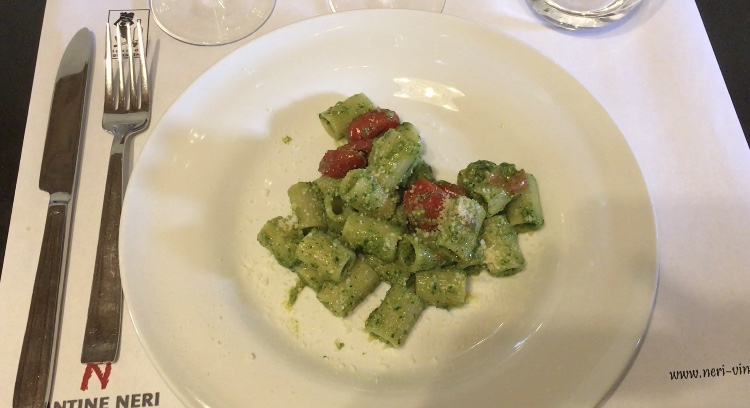
Another element of dining culture in Italy that greatly interests me is the wine aspect. While in America (especially in the college town of Manhattan) we may witness college students guzzling cheap wine in an effort to get drunk, wine is never for binge-drinking in Italy. In fact, binge-drinking does not seem to be an extremely prevalent issue in Italy. One glass of wine is meant to be sipped and enjoyed with each meal; it is considered an automatic part of a meal and compliments the food perfectly. If one finishes their wine before their meal in Italy, the waiter will not likely come to the table and ask, “Another one?” as is often practiced in America. A glass, ONE glass, or a bottle to share with the table, is ordered at the beginning of the meal as soon as the food is ordered. Most restaurants have a house wine available, which is a cheap yet still good wine meant to compliment the food at a restaurant. Italians normally do not drink this wine on its own.
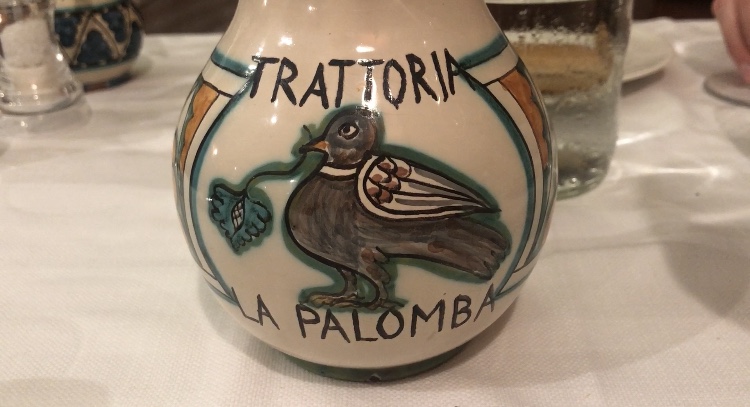
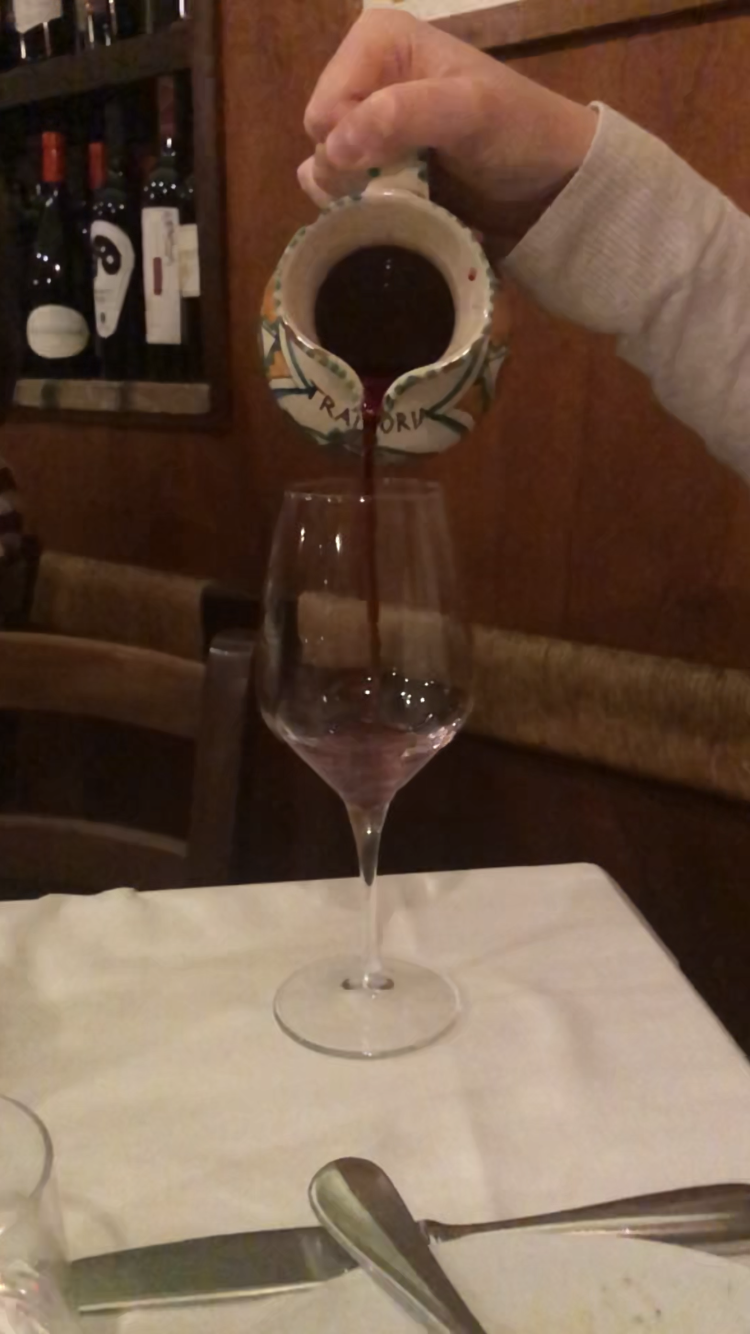
I have witnessed the impact of Slow Food at many restaurants in Orvieto. Additionally, I have had the opportunity to visit several of the Slow Food certified restaurants here in town. The Slow Food movement is all about using locally grown/farmed ingredients for cooking and serving. Due to this movement, I have witnessed a great pride for the food served in restaurants that we do not possess as highly in America. Additionally, I have personally felt a shift in the way I have been eating here in Italy. I have left the restaurants feeling refreshed, healthy, and confident about the foods I am putting into my body. I am very passionate about using locally grown ingredients at home in Kansas as well, but they are not as widely available and are very expensive. Thus, I am a big fan of the Slow Food movement here in Orvieto, and I am proud of the food I have been eating.
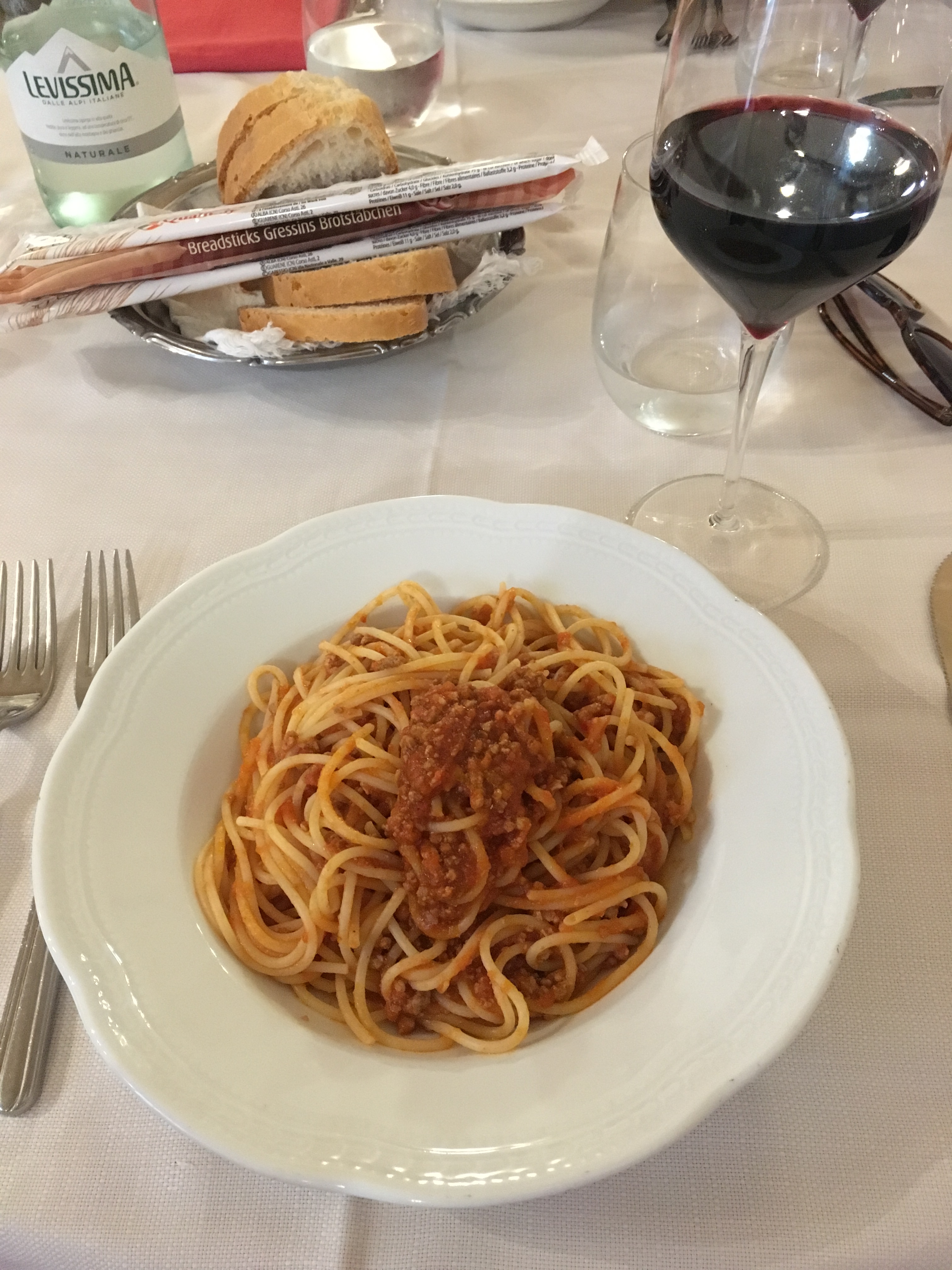
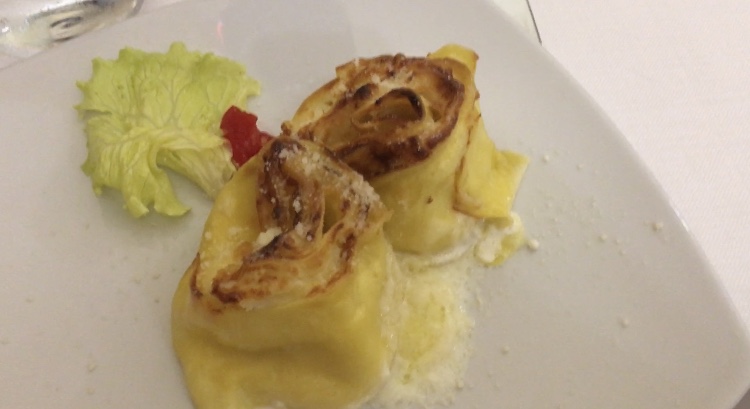
I have not been served a single “bad’ meal here in Orvieto. All of the restaurants I have visited have been fabulous. However, out of all of them, my favorite has been the nidi at Trattoria del Moro Aronne. I have now dined here twice since being in Orvieto, and both dining experiences have been incredible. We were recommended this restaurant (and this dish) by Erin Wiersma, one of the professors of KSU in Italy. As soon as I took a bite of this fabulous and unique dish, I knew that I could always trust her recommendations. I enjoyed the meal due to its perfect portion size, use of local/regional ingredients, and welcoming dining environment. I will be returning to this restaurant many more times before departing Orvieto.
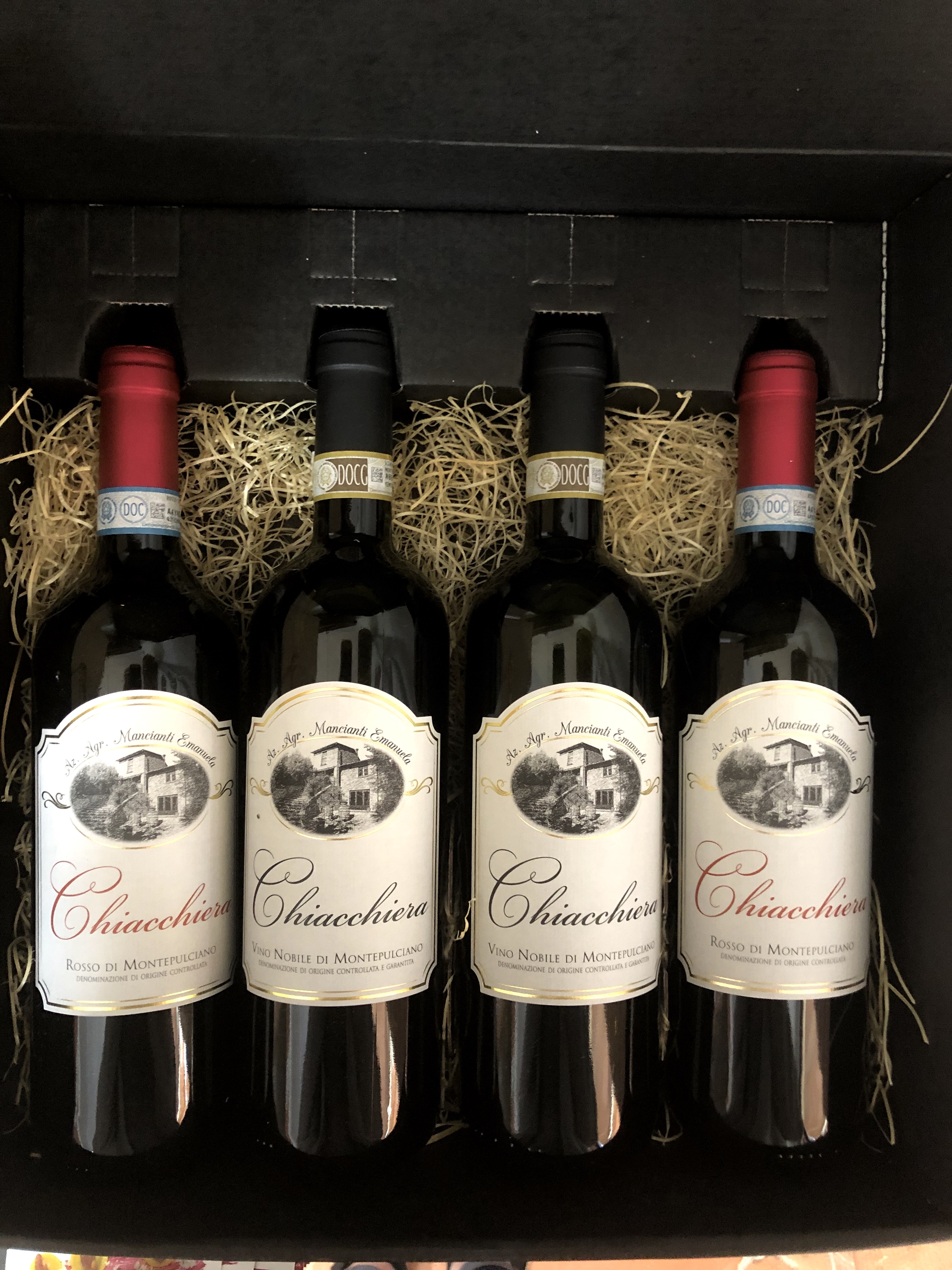
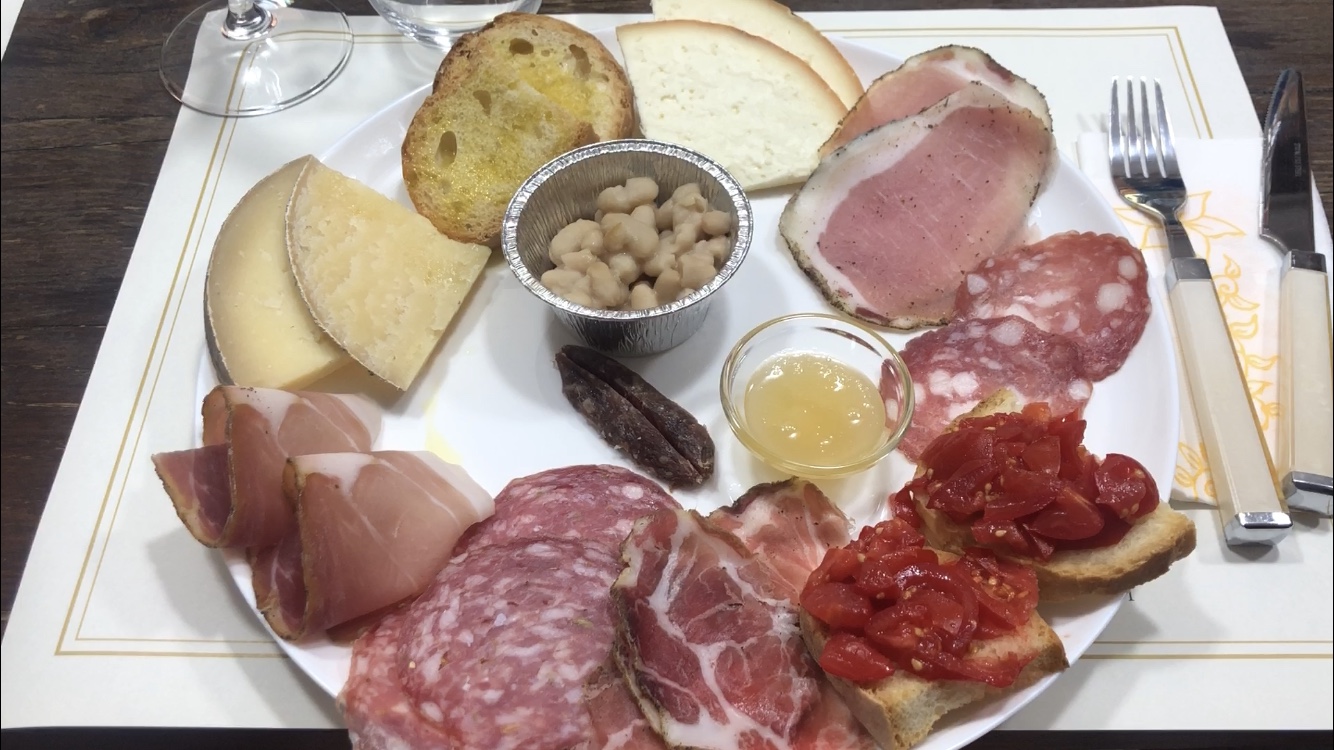
Over the weekend, I traveled with Kellie Deutsch from Orvieto to the nearby Medieval town of Montepulciano. We decided on this specific town not only because we heard that it is a gorgeous place, but also because it is known for producing fabulous and highly esteemed varieties of wine. (In fact, I was served a delicious Montepulciano classico in Trattoria del Moro Aronne!) The food in Montepulciano was generally the same as the food in Orvieto, but while traveling, we did have an opportunity to tour a winery 6km from the Montepulciano city center by the name of Cantina Chiacchiera. Since no one else signed up for the tour that day, we ended up getting to have a private tour of the entire farm with a very knowledgable and kind tour guide. We learned about how the grapes are grown, how the wine is fermented and stored, how the wine is bottled and labeled, and finally, how the different wines produced there differ in taste. The tasting portion of the event included an IGT wine, a DOC wine, a DOCG wine, and a dessert wine, as well as a fabulous antipasti plate. My personal favorite wine was the DOC wine because it was flavorful and complex yet very smooth and versatile. Later that afternoon, we saw the Cantina Chiacchiera wine being sold in a shop inside the Montepulciano city center, and I felt very in-the-know about the wine and proud to have been a part of the winery experience there.
Overall, I have greatly enjoyed all of my dining experiences in this beautiful country, and I am greatly looking forward to continue eating my way through Italy in the weeks to come.
Ciao,
Zoe

 Ciao dall'Italia